


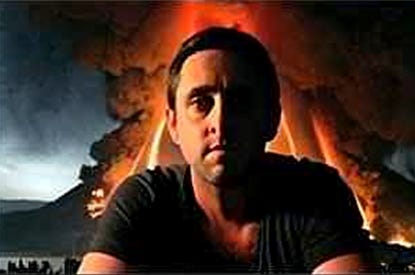
Mr. Hess opened the windows to the classroom as the odor of sweat permeated everywhere. The boys just completed their afternoon calisthenics, the rigor of which ensured even the most fidgety of boys saw the desk as a reprieve from the brutal physical exertion. Spring brought with it a soothing temperature in the small midwest town, and also the stifling body odor of young boys. Mr. Hess taught Modern History, dealing with the Great Collapse and Revitalization. The boys were aged 11-14, all of the same general academic capabilities.
When the Restorationists took control, they first took over the local schools. One of their first edicts was the removal grade levels, every student encouraged to accelerate their learning and complete their studies. While beneficial to everyone, it was largely a political move, as the strivers and gifted were saved from several years of needless tedium to fill an application to yet another institution that was not capable of teaching them anything. Severing that hold brought with it the loyalty of the rising elite. Like most small towns, one greeted the Restorationists as saviors, and there was relatively little destruction. Elsewhere things didn’t end as well.
The students were still fidgeting and restless, but not from excess energy. They could see the girl’s school from across the field, and most of the older boys would be going to the dance after class ended. The dances were the only officially allowed educational interactions between the sexes until 16 years old, where most would be completed their schooling. As young people go, it was only enforceable to a point, and administrators regularly looked the other way at indiscretions with plausible deniability. They would also look the other way when a boy came into class with a bruised face from a parent taking care of instances of unchivalrous behavior with their daughter.
There were no clocks in any of the basic wood paneled walls to tell when class ended, as class didn’t run on such rigid schedules. Mr. Hess, an engineer turned warlord turned teacher presided over the class, his eyes mined deep within his face, with a shriveled face and bent back limp not even modern surgery could fix. His body had experienced starvation, his eyes apocalyptic misery, and his mind scars from brutal decisions that haunt his dreams. Relief only came when a faction ascended into power worthy of his service. Now 74, he was the last generation who could remember The Great Collapse.
Most instructors hailed from professional classes in semi-retirement. During the great purge of the universities, the first profession to be destroyed utterly was the education department. Now instructors were voted into service from the community. When the hostilities ceased, he turned his sword into plowshares to harvest the next generation of men.
Beyond the simple chalkboard in the front of class and bare wood of the furnishings, just a block down held massive computing cluster servers, busily computing new chemical compounds, logistics algorithms, and biomedical simulations. None of the students had access to even a screen until they turned 16, the penalty for noncompliance upwards of 20 lashes, the elder who allowed it to happen facing 50 and 3 months forced labor. Like pursuing girls, the most spirited were willing to take the risk, and again administrators would often look the other way for the truly gifted. One could complain about fairness all he wanted, but the talented lived by different rules, and a society had to accommadate it to ensure they reach their potential and win their loyalty.
Many of the boys didn’t understand much of the new structure. They didn’t understand the animosity towards technology in the young, didn’t understand why they couldn’t have classes with peers their own age, and didn’t understand the seeming draconian discipline in a world that was awash in plenty after great deprivation. As time passed, the reasons would turn into tradition that seemed to make little sense, but was insisted in being adhered to. Mr. Hess had no illusions about convincing everyone the logic of the new ways. He just had to convince the right people, and the rest would follow.
“Everyone has read the dialogue assigned, correct? the Yarvin vs. Rufo dialogues?”
“Yes Mr. Hess.” The boys replied in unison.
“Jacob, please summarize Yarvin’s position.”
Jacob stood up. He had a soft, sensitive personality, capable of deep insights into human psychology if lacking a killer instinct. He also had a penchant of digesting massive amounts of data, often delving deep into minutiae of fantasy worlds. At twelve years old, the second youngest in his class, he would likely take the most extensive of education, likely getting his doctorate at 22. There was some unfortunate animosity of the scholar class stemming from before the Great Collapse, but he would prove himself useful and valuable man. The idea that a scholar only need to read, think, and write was purged in favor of far more extensive forms of mental discipline for their cognitive elite.
“Mr. Hess, Curtis Yarvin argued that the religious symbols of the previous era, such as the Declaration of Independence and the Constitution, were more solemn fictions at the stage of the American Empire. Since governments are run by men, there is no universal system that can fit into every society. He also argued once a society collapses, only an Absolute Monarch can again restore order.”
The rest of the class nodded in agreement, with no dissenters. They had the gift to see how everything turned out.
“Brann,” Mr. Hess said, pointing to the tall, strong teenager in the front, “please summarize Rufo’s position.”
He stood at attention. “Mr. Hess, Rufo believed American Liberalism was a unique and true system in world history and believed the original regime could be salvaged. He was wrong.”
He sat down with a smug, self-righteous grin. He knew such blanket condemnations irked Hess. A few chuckles emanated in the classes, followed by some light clapping in the back. Mr. Hess scowled, even if inside he enjoyed the youth’s chutzpah. He knew such disregard for norms would land him countless pushups, but the lad was so used to such punishments and so stubborn such reprisals rolled right off him. As annoying such an obstinate student was, whatever punishment they gave in modern times paled to the previous regime, who would have drugged him through most of his youth.
“And how was he wrong?”
Brann shrugged, “well, just look. The Empire collapsed ten years later and he tried in a show trial and murdered in prison. I’d say that was pretty wrong.”
“So you’re arguing he was wrong to defend the institutions he felt fealty to?”
There was some squirming in the seats. Surely Mr. Hess wasn’t defending the old order, the order that had roving mobs of illiterate brutes terrorizing the population while handing needles to inject the homeless with hard drugs. Surely, he remembered all the stories of regular people being jailed for defending themselves. Surely, he knew the stories of how a single slur could land a man in more time in prison than even murder. He had lived through it, and every member of the class heard similar stories from countless sources. Even as the first-hand accounts faded, there were enough that revisionists weren’t yet capable of corrupting the past.
Mr. Hess let out a deep sigh, letting the room drip in silence for a few moments before starting. “Christopher Rufo had an Asian wife, a recent immigrant, and had several children. He saw how foreigners from all over the world came to The Empire and lived in its ideals of merit, the best person for the job. He marinated in a world where free discourse and pursuits could bring out the best in people’s potential. Is there not anything magical in such a view of the world?”
“Magical or not, it’s not real.” Brann replied. “Yarvin understood this.”
“And what did Curtis ever do?” Mr. Hess interjected.
“He…” Brann started, “he wrote about it.”
“So he wrote about a future king, but refused to work to become king himself. He talked about wielding power but refused to try and gain power for himself, and somehow this makes him the greater man?”
“Mr. Hess, aren’t we talking about who was right, not who was the greater man?” Anton asked.
Hess nodded. Anton, age 11, was the strongest prospect in the class, with a sharp mind and firm convictions. He dominated in both the playground and the classroom and stood above his peers. He hoped the young boy would enter the conversation of his own will. At this rate of performance, he would get the attention of the higher echelons of the Restorations.
“Is there any difference between the two?” Mr. Hess asked.
“Dying for a doomed empire that hates you if a bad decision, as principled as it might be.”
“Would you consider the same of Socrates when he drank hemlock?”
He shrugged, “yeah.”
“You remember Man and Technics that we read last month, don’y you? Could you recite near the end of the treatise, the soldier of Pompeii?”
Anton nodded, reaching into his desk and retrieving his copy. He flipped through the pages to the requested passage. He took a quick breath and recited:
“We are born into this time and must bravely follow the path to the destined end. There is no other way. Our duty is to hold on to the lost position, without hope, without rescue, like that Roman soldier whose bones were found in front of a door in Pompeii, who, during the eruption of Vesuvius, died at his post because they forgot to relieve him. That is greatness. That is what it means to be a thoroughbred. The honorable end is the one thing that can not be taken from a man.”
Mr. Hess paced the classroom.
“Listening to you all speak gives me the impression you think honor, glory, and duty can be solved in the same way one does math equations. Just figure out the right equation and everything is resolved, right? Get the theory down and everything falls into place. What nonsense. The truth is no one has been in your positions before. Sure, there are people who have been in a similar situation, in a similar culture. Rest assured, I’m not saying any one of you are special, but one thing that every man owns is his moral code. It’s the most deeply personal gift one can give himself, and woe to the man who throws it away.
On one end we had The Philosopher, the man with the answers of why he’s right, and nothing anyone, not even The Philosopher, can change the order of things. The only option is to wait for someone to do it for him. On the other side we have the idealist, the one who loved the old empire, the classic world of Americana from his youth, kids on bikes, races getting along, merit. He wanted to bestow the same world onto his children, and was willing to sacrifice everything for the chance to maintain the best of the old orderr. The Philosopher held himself separate the world of duty, honor, and life itself. The Great Man embraces them all. That is why The Philosopher was a smart man, but Rufo was a great man, and The Great Man is always right by the truth of what he lived.”
“But Mr. Hess, he was ultimately wrong. He died for nothing, and the empire crumbled.” Anton interjected.
“Was he wrong when he lived, when there was still the possibility to change the tides of history? And even if he knew it was an impossible quest, does that make what he did any less honorable? What about that soldier in Pompeii? Was he a great man or a fool? Is it foolish to die for one’s own personal code? If he chose to break his oath and abandon his post, could such a man be considered alive anymore? The question we all need to ask ourselves is what will we did when we’re witnessing our own Pompeii ”
Another spoke up in the back row, “so what you’re saying is you show loyalty to the ideals your institutions, regardless of how foolish it becomes? Wouldn’t that make Otto Spier and the Restorationists in the wrong? After all, he mocked Rufo as an idealistic simpleton.”
“Otto Spier was completely right in what he did, and Rufo was completely right in what he did. There is no contradiction. We are not platonic forms, we are men of an immutable lineage in a certain place and time.”
“But they believed different things.” He replied.
“You don’t believe that two men on opposing sides of the battlefield can’t both be in the right, that both can’t be great men? That both can’t have a warranted cause to die for? Every graveyard from every war in history is littered with such men, and here you argue like a discourse and debate club. It’s such nonsense that led to The Great Collapse. The thought that discourse will always lead us to the answers, to always avoid conflict. I tell you, that nonsensical sophistry brings the collapse of empires more often than the most savage of invaders. Discourse…” he paced and spat.
“But Mr. Hess,” Anton interjected again. “Isn’t that what you’re doing right now? It sounds hypocritical.”
The entire class suppressed a chuckle, and wondered what inhuman punishment the old man would unleash for such insolence. Hess stared blankly, like the words pierced right through his heart. His mind left the classroom, travelling to some old memory that bubbled up from the comment, Hess shook his head, his wrath and fury subsided, and he nodded in agreement. “That’s true, I won’t convince anyone with mere words. My hope is only my stupid life is sufficient evidence.”
He sighed, looking out the window in melancholy, then back to the class. “Such might just be the musings of an old man whose time is at an end. Let me tell you, getting old isn’t worth it. I should have died decades ago in my own Pompeii. Instead, I’m here. I can only tell you so much, give you so much understanding to enter a world I will never see. I grew up in a dying age. You’re all young, entering a young age. In such a time your optimism is bravery. Class is dismissed, You older gentlemen show those girls a nice evening.”
The class hesitated, looking at each other as their teacher wiped his face and sat down, his eyes again showing himself somewhere else altogether. He composed himself and stood back up, waving them away, and they slowly left the room. He sat on his desk and collected the student’s papers. As the final scuffling of students crossed the hallway and left the building, he soaked in the silence for a moment and got out his red pen.
Holy shit that's the best article I've read here by far! Gonna sub and throw some well deserved shekels. finally..... that's art
Wow!
We need more of this. Please keep your imagination alive.