


The all-out blitz against what has been termed “trad marriages” has been the most idiotic moral panic of the last year. While there were plenty of ripples in the last decade regarding this phenomenon, it came to a head when Lauren Southern got a piece in the New York Times telling how her trad marriage fell apart, expanding her lousy personal experience to the entire subculture. While many progressives cheered, most people without an axe to grind and a memory better than a goldfish scratched their heads in confusion. Even before the NYT piece, there was plenty of dirty laundry on this gal, and it’s only gotten worse since then. Since when was she ever trad? Why is the NYT directing the full force of their ire on this subgroup under such weak pretenses?
The hysteria shows no sign of fading. We have a bestselling novel to stick it to those dumb trad-wives that was immediately picked up for a TV series. the New York Post recently made its own moral panic piece. Countless feminists on Substack are warning of the pitfalls of this trad lifestyle. The media is directing nearly all the propaganda at women, forming a circle to defend against this nefarious trend that could overturn more than a century of political victories.
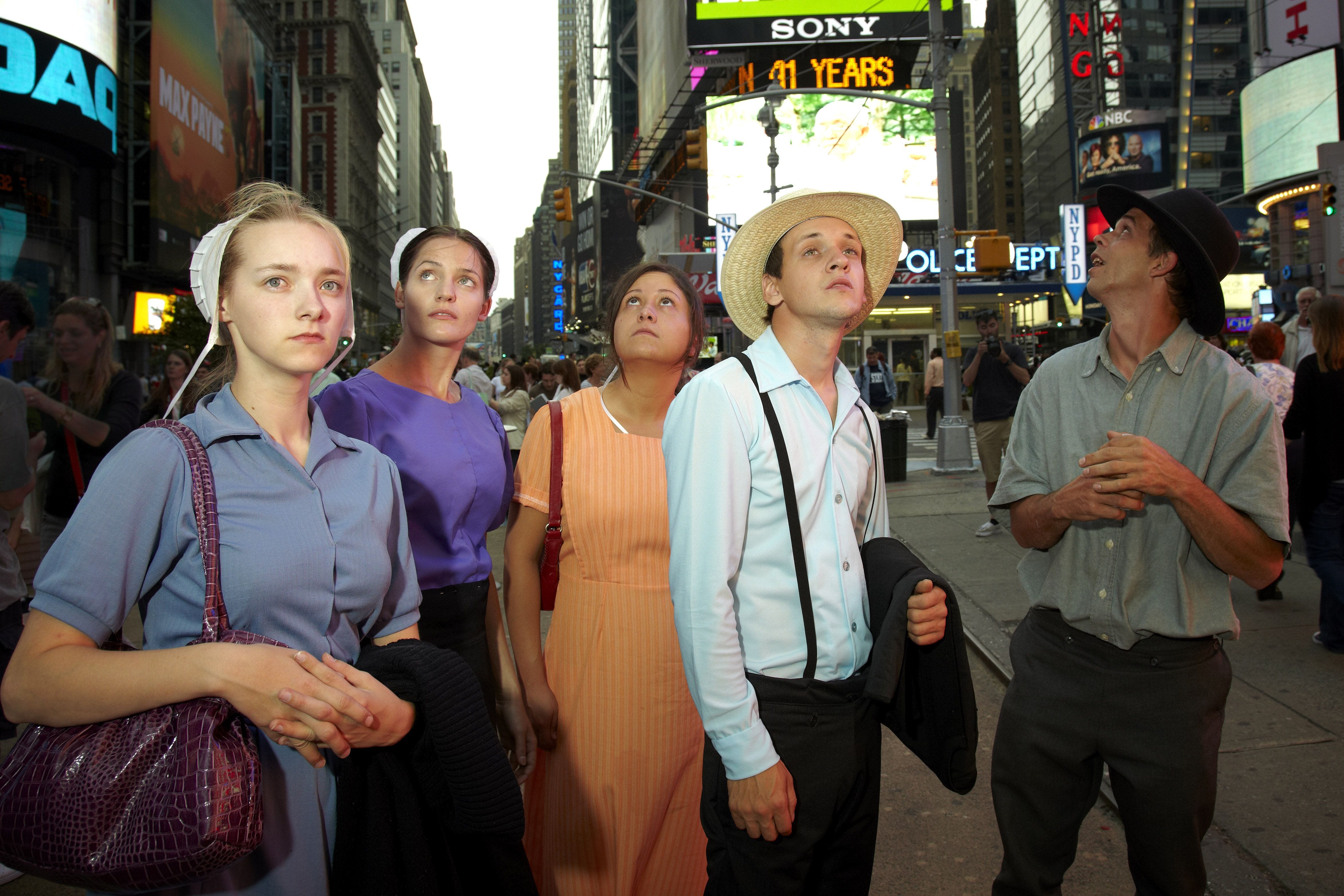
In their minds, trads seem to be analogous of the worst 1950’s stereotypes with the domineering husband keeping his wife chained to the kitchen, or the lifestyle of Instagram influencers with millionaire husbands pretending to be living frontier life. None of them know anything about actual trads outside of what equally ignorant people online or media outlets say.
The entire argument is silly. The 1950’s weren’t trad. The modern frontier aesthetic is a fantasy. The most traditional lifestyle is not the father going off to work and the mother staying with the kids, nor having a bunch of boutique cows and chickens running around that gave no income, but the entire family being involved in the family business. For most of human history, husband and wife worked together and had specific roles not because of ideological commitments, but to survive. A woman couldn’t handle hard farm labor, and men don’t have lactating breasts to feed children with. It was an entirely practical affair. The family would be part of a provincial parish close to home and would have relationships with their immediate neighbors. Outside of a small percentage of people who own their labor in a small, homogenous, rural town, these people don’t exist anymore. So what is meant by trad in our age?
Most modern trads make a significant effort to find like-minded people, often driving a significant distance to find a Church or school filled with fellow travelers. While some manage to be in proximity of their cohort with significant effort and sacrifice, most make do how they can. In modern times, it’s a life that requires an active effort to enter as opposed to being born into it.
Is “trad” the family I know with eight kids, five acres, and seemingly every farm animal in existence that they slaughter and sell in the local co-op? Is it the lawyer with six kids who works sixty to eighty hour weeks to maintain the family lifestyle? How about the guy who owns a multi-million dollar bricklaying company that goes to an SSPX parish? Is it the super-crunchy mom of two with fertility issues who has a twenty-hour-a-week side-hustle on Etsy? Is it the hyper-pious family with a large garden and a crunchy lifestyle who were unable to have any children and adopted? How many kids do you need to be trad? Can urban Orthodox families be trad? Can parents send their kids to public school and still be trad?
If you go by rigid criteria, all you are getting are bizarre, arbitrary rules that are ignoring a large swath of people who fit into the general “trad” category. People don’t think this way when making life choices. There are gray areas. It isn’t so much an ideology of boxes to check than it is a value system of what’s deemed important as well as a social network. In this way, it’s no different from other groups. So why the hysteria and nonstop propaganda? Why have the media tastemakers signaled to the internet’s useful idiots to amplify their warnings?
Probably the most effective way to start is to get a grasp of a “trad”
world-model by comparing them to another well-discussed subculture, The Professional Managerial Class (PMC). While my friends mostly fall into the “trad” category, most of my professional contacts fall into the PMC world. Both have made an effort to separate themselves from mass culture, though for very different reasons. Your mileage may vary, but this is my best shot at comparing the two-worlds, done as impartially as possible.
Once the general parameters are set, the hysteria and counter-signaling by the elite classes will make far more sense. Underneath their moralizing veneer, it’s a response to a potential outflow of centralized power to local institutions and an internal demographic collapse.
Marriage:
In marriage, two main factors are in play in vetting potential mates, romantic love and rearing of children. There is also the conflict between personal autonomy and being a cohesive unit. No couple is entirely on one side of the spectrum, but prioritizations are going to be clear.
The PMC emphasizes romantic love and autonomy. They want to see their partner as a “soul-mate” with deep bonds that reach the level of ecstasy. They want to achieve the paradox of having this level of connection while also keeping their independence and individual identity. PMC couples are more likely to accept different opinions in their potential spouse while dating, taking a “love conquers all” type mindset. What matters is you keep the love. Divorce, therefore, is far more accepted. Since love is the reason for marriage, when the love dies, so can the marriage.
Trads tend to ask the question “will he/she make a good father/mother” before romantic affections. They also consider marriage as becoming single unit to bring the next generation into being. While romantic love is there, marriage is a far more practical affair, like a business partnership. Since raising children is foremost, divorce is far more frowned upon, and those who divorce are likely to be stigmatized. This, on top of religious sensibilities, creates a “ride-or-die” mindset that forces the couple to learn how to get along, even if it never matches their ideal life. They understand that while a failed marriage does not mean destitution and death anymore, it may mean well death to the family’s cultural and biological line in one’s grandchildren.
Patriarchy:
In the PMC, every marriage is assumed to be egalitarian, where both parties discuss the topic until they can come to a resolution. This is a polite fiction, since it becomes clear either the wife or the husband is the one actually in charge. Still, when a decision is made, you have to pretend it was both of them who made it, which makes life difficult when the decision affects you and you feel you’ve been wronged. Because of the emphasis on independence, saying “no” is verboten and evidence of abuse. This can create never-ending cycles of arguing which slowly becomes constant sniping and frustration as the constant need for consensus becomes wearisome. To the outside world, they are treated more as two individuals as opposed to a single unit.
Both are, theoretically, equal breadwinners, and both share chores.
In more trad lifestyles the husband makes family decisions. He both has the right to say “no” and takes responsibility for any decision. Even if the wife hectored you into doing something idiotic and destructive, he’s on the hook to say it was your decision. It goes without saying the nightmare scenario here is the husband who cares not one whit for the wife’s needs or the wife who demands the husband go along with everything she wants. To the outside world though, the family is a cohesive unit.
The man is expected to be the main breadwinner, but women working part-time is common. Women often find the side hustle an effective way to ease financial worries and give a reprieve from screaming kids.
Childrearing:
The PMC has fewer kids, but gives them massive financial investment both in education and leisure. Since they both work full time, they will find the best daycares available after hours of research and apply to pre-schools when the kid turns one.
Disney World vacations adding up to ten grand is not unheard of. Expensive travel sports, elite schools, special after-school programs, and the like spend an incredible amount of time and resources. The goal is not the transmission of values so much as becoming a productive member of the elite in existing institutions. They prefer standardized education models that let them rack up college credits in “practical” areas and follow a thoroughly modern curriculum. They optimize their education for test scores and activities that look good on a CV. This, unfortunately, leaves little time for independent exploration of interests.
They prefer structured play over unsupervised play, and the children are watched like hawks to ensure no bullying, horseplay, or other anti-social behavior is done.
Trads have many more kids and emphasize cultural transmission more than elite status. Moms are expected to spend the child’s early years under her care and in instances where they are forced to work full-time, extended family or trusted sitters are used. Daycare is strongly frowned upon. Children are more involved with kids from Church through their own how-grown local sports and arts than seeking the most prestigious travel teams or dance troupe. More time is given for exploring and independence, sometimes at the expense of necessary education. They prefer classical training, with the more gifted learning Latin and ancient literature over more contemporary offerings. For this reason, homeschooling and very religious schools are their ideals.
Instead of aiming for the elite in a ruthless battle in existing institutions, they want to create men who can become financially established quickly and women who know how to raise children. The boys learn to fix and build and the girls learn home management. In general educational categories such as reading, writing, science, etc, boys and girls are taught equivalently. Some gifted ones may be encouraged for the priesthood or the sisterhood as well as the arts to build the bulwark to run alternative institutions.
While trads are wary of who their kids hang our with, children have far more latitude with unobserved play. As long as the kids don’t have electronics they can run wild.
Openness:
The PMC are superficially more open to outsiders. While they may invite you to gatherings and exchange pleasantries, there is always the nervousness because of rapidly evolving elite consensus. Because of unpredictable changes in social mores, what is acceptable to believe one week might be verboten the next based on the next media blitz. Because of the constant fear of reputational destruction based on a verbal slip, they never truly open up to either their in-group or the out-group. Overall, they tend to be chameleons and rely on stock answers that can pass the acceptability filter.
Trads are far more distrustful of outsiders, oftentimes gauging them based on religious services attended, general lifestyle, and other qualifiers to ascertain whether they are trustworthy. Because of the, often justified, assumption they are surrounded by a hostile culture that can hurt them professionally or through bureaucracies like CPS, they keep tight lipped. Once one is seen as part of the in-group, they are far more frank with their opinions.
Social Institutions:
The PMC trusts the experts. Since they are inundated with core institutions, they follow what they are told. They will get their kids vaccines right on schedule, they will understand the newest parenting fads. They will accept the latest political mandates, or at least keep their mouths shut. Every viewpoint and action will be curated through a clear consensus mechanism to ensure it doesn’t fall outside acceptable bounds.
Trads have their own list of experts, though there are no prestigious institutions or single sources of truth behind them. Instead of an official bureaucracy like the CDC or FDA, it is a mix of the eccentric doctor a mom found on YouTube, your nurse friend, some random people they talked to during food co-op pickup, sperging out researching the topic online, or simply following what their parents taught. It’s a mix of research, social proof, and gut instinct that guides their choices.
Charity:
The PMC, as part of the managerial elite, see problems as systemic. They tend to think in terms of updating the software general culture runs on to eliminate social ills. Because of this bureaucratic mindset, issues are thought of in abstractions such as racism, homelessness, racism, etc. Therefore, they are advocates of the spanning NGO framework and legislative bodies to solve these problems. They tend to prefer technique and processes to remove social ills than getting bogged down in individual cases.
Trads prefer to put their charity towards something tangible. They prefer to donate to their local church or a parishioner who just had a baby and are on a limited income. Because of this, the charities they give to tend to be smaller and of more limited scope. Their spare time is more likely spent helping a guy shingle his roof or giving meals to the local homeless than protesting outside of a courthouse or spending time on a social activist board.
The can respond with astounding viciousness when they feel personally threatened, as any legislator who tried to add homeschooling regulations will tell you. Overall though, they tend to focus on supporting their in-group, where rich members will donate to a Church expansion but are less likely to donate to fix social pathologies outside his purview.
Both, however, have a strong interest in their immediate neighborhood, and will steadfastly attack visible blight. While the most progressive of the PMC might have the most permissive attitude towards druggies and criminals in the city, the buck stops when it encroaches on their neighborhood.

Reverse Rumspringa
The Amish have a tradition called Rumspringa where the young leave the solitude of their community to live in the wider world. They can then choose to come back or leave the community for good. For most of American history, a similar coming of age occurred, even if not endorsed by their community. Many youth from small towns, farms, and ethnic neighborhoods went to college, meshed into the professional classes, and abandoned their parochial lives. The reverse rarely happened. Over several generations, local economies have sustained an extensive brain drain of their best and brightest while the monoculture absorbed new talent with ease.
While it’s very early, there is the possibility this dynamic is turning on its head. Increasingly, people who would be involved in running our global technocratic infrastructure are choosing to reject status and striverism in favor of living a more organic life. Contrary to the stereotype of trads being ignorant and backward, they are increasingly from highly-educated and high-income cohorts, as the conversion figures to Orthodoxy and Catholicism clearly show. This doesn’t mean lawyers in these communities are becoming subsistence farmers. They’re working for law firms. It doesn’t mean engineers are cloistering and building shacks in the middle of the woods. They are working at Ford. Still, they increasingly spend their income and time on alternative institutions, which will in time turn into alternate power centers. You have eccentric professors building new schools, skilled craftsmen with a locked-in clientele of fellow trads who will pay top dollar for their services, and a network of like-minded individuals that can resist social engineering.
This doesn’t mean the trads are taking over the PMC, nor does it mean that the collapse of elite culture is imminent. As of right now, the flow outward is more a stream than a tidal wave, and more people from parochial communities are getting sucked into the monoculture than vice versa. What it means, though, is that the PMC no longer has a monopoly on “the best and brightest”, nor to they have an all-encompassing monoculture one must be a part of to attain power. Instead of power blocs of government bureaucracies, academies, NGOs and prestige media that all have the same message and moral framework, alternatives are sprouting.
What happens when Opus Dei converts an aspiring Harvard lawyer? What happens when a doctor builds a natural family planning practice? What happens when a talented accountant starts a business catering to his small trad cohort? Power seeps out of the managerial state and into these alternative communities. The global power base weakens as a local power base grows. The monoculture is finding itself unable to absorb talent like it used to, and their skilled bulwark are increasingly disillusioned with what they offer. Good jobs are harder to come by, status is more difficult to attain, and the social games are suffocating. Elites are unable to create a meaningful existence, and are fighting a war against hundreds of pockets of resistance that promise a stronger sense of belonging.
Stronger family cohesion allows for more effective flexing of economic, political, and cultural will. A unified domestic front is easier to builds alliances with adjacent families as opposed to dealing with two relatively autonomous individuals. They also have significantly more children who more difficult to boil off. The more income and status agnostic trad culture is not as burdened to live in wealthier neighborhoods, are not as economically and socially encumbered by as many broken families, and increasingly have the antibodies against modernity to keep everyone in the fold.
Prestige media knows cracks are showing in the managerial machinery, from mass media to elementary education, that are increasingly unable to fulfill their fundamental tasks, and trad communities have proven able to succeed here with a fraction of the budget and manpower. When things worked well, the monoculture could easily swallow the top talent from parochial areas. This is no longer the case.
They are noticing a large cohort of talented male defectors and know the only way to stop generational cultural shift is to stymie their ability to raise a family. The ground troops taking their orders from legacy media declare this is out of compassion for women who will fall to these sexist, domineering men, but the meta-game is an entrenched elite trying to hold on to imperial power as alternative power centers are forming all around them.
The current media blitz is both manipulation and a subtle threat to women to stay part of the monoculture. As the quality of the trad male grows, women will naturally turn their heads and wonder what this trad thing is all about. The respected man running a fraternal organization in a small tribe starts to look like a better prospect than an interchangeable middle-manager working at GloboCorp.
There is, of course, the core spiritual aspect to all of this. Most people who enter a more “trad” community do so out of a conviction there is more to this world. The spiritual dead-end of technological managerialism is the outcome of an ossified system that works in symbols and abstractions while forgetting the human elements and deeper meanings a society should foster. While technique and processes have been wildly effective in the last century, they may be reaching their breaking point as the drive to homogenize humanity reaches hard limits as all spirituality, organic life, and higher meaning are washed away.
Back when there was a more organic aristocracy, there was still an opening for spiritual fulfillment in addition to accumulating status and power. There is little organic about the current managerial system, and many men are finding their place in a more localized, religious setting where they can be a big fish in a smaller pond.
Time will tell whether these early stages will morph into something groundbreaking, or whether it will be relegated a small blip in American history. The jury is out so far, but what is clear is there is no reason to follow the hysterics. The trad phenomenon is a natural reaction to social blights that are becoming impossible to hide, and angry screeds are not going to stop defectors, nor is hectoring going to stop women from entering spaces where there are higher quality men. If you want to understand trads, talk to trads, and ignore those browbeating you under the false pretense of looking out for your well-being.
Thank you for reading Social Matter. If you enjoyed this article, please share and subscribe. Paid subscribers are also appreciated.
A well written and very insightful article. Many thanks. 👍
Great article! I think the trad movement online has a lot of larpers focused on sexier little house on the prairie ideals for clicks. I notice most of these people are attractive young women in their 20s who usually don’t have kids yet and focus on somewhat alluring shots of baking and cooking lol. The other end of the spectrum in the news media trying to portray the movement as something akin to being a sort of bride to Jeff Warren nightmare scenario which is ridiculous. But I think you nailed the split between the two cultural groups of the PMC and the trads. I guess I would sort of be pmc as I went to college and law school and became a lawyer but I reject the pmc lifestyle of few kids and indulgent spending and luxury beliefs. I have three kids and send them to public school which is perfectly fine for the most part in my more rural southern area. My wife is a nurse who stays home now that I finally make just enough to support us on my own but we agreed even early on in our marriage that she would work part time when we had our kids when we needed two incomes and we were blessed not to have to send them to daycare. I don’t plan on steering my kids to the pmc track forcefully and I’m open to them pursuing other career tracks and training as long as they are confident they can support themselves and their future families. The pmc class is very narrow minded about college and career tracks and that is going to bite them in the ass as those tracks are offshored, DEI’d, Hb1’d, or AI’d into oblivion. I never saw my education as some requirement to advance into a higher social class it’s just a job to me but I was of the last few of my generation that had college pounded into my head as the only way to possibly advance in life which I believe is utterly false now for a lot of people. I think if you raise a good kid and are present in their lives growing up they will be able to figure out how to provide for themselves and people need to stop calculating the cost of children based on the higher education costs they may or may not need in the future. I think you said perfectly when you stated that pmc folks focus on romantic love as they entire reason to be married which inevitably leads to failure. Trads see marriage as a whole in that romantic love is just a part of the marriage that needs attention but will naturally ebb and flow over time. Trads focus on marriage as a true partnership in the venture of raising a family and building a life together and not being two independent roommates who share a house and are only content as long as they feel aroused romantically. It will be interesting to see which culture will be dominant going forward considering the future economic and social challenges we face in the future…