


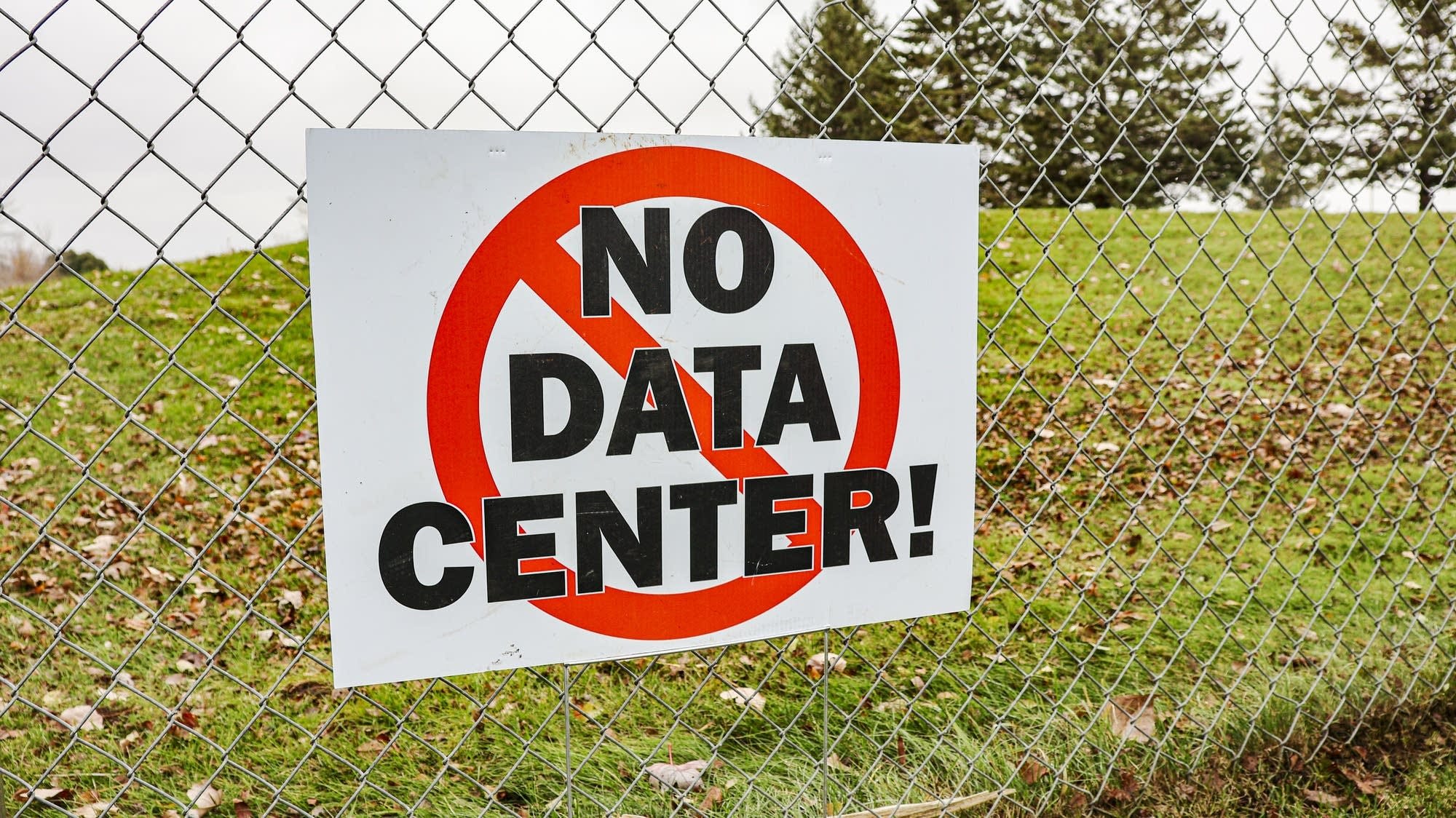
In 2024, Microsoft bought 272 acres of land close to the rural town of Dorr, Michigan. Of course, its purpose was not for farming or enjoying the idyllic countryside, but creating a massive new data center. Like clockwork, the residents protested the development, voicing concerns about its water use, light pollution, noise, electricity needs, and increased road traffic. Microsoft responded by trying to reassure the community that these issues have been analyzed, they have shown pollutants can be mitigated, and the massive center would have minimal impact on the small community.
Unsurprisingly, just like in Lowell and other towns that are fighting to keep data centers out, the residents don’t trust big tech. And no one can blame them. A hegemonic corporation like Microsoft has little care for the intricacies of rural life, and glossy papers and pamphlets does not quell the concerns of those who see a powerful usurper upend their world. They know that out-of-towners will be employed there, not locals. They also know they bear all the risk and environmental fallout and get little in return. The results are in, and data center installed elsewhere have levels of pollution that could damage your lungs on top of being a massive eyesore close to your backyard.
Companies like Microsoft have nearly infinite capital to spend, and these centers will be in the range of hundreds of millions to billions of dollars to build and tens of millions to operate year after year. The residents won’t see a penny of these millions. The fabrication will happen elsewhere, constructions workers will be shipped in, and the facility will stand as an alien structure, using their water, electricity, and land while operating completely separate from the communities surrounding it. While many city governments are salivating at the increase in tax revenue, it leaves everyone else in the dust.
The irony is it doesn’t even help state revenues that much, as the legislature has given generous tax subsidies to build these rectangular monoliths, even though it’s clear no one wants them in their neighborhood. It was once taken as a given that businesses coming into the state would be a boon for the economy, building jobs and money that would bring prosperity to everyone. There was the assumption that businesses would hire locally. No one believes that anymore. This is especially not true of data centers who employ of miniscule number of permanent staff. It begs the question of why the state is subsidizing businesses no one wants.
The push to incentivize data centers started with Governor Rick Snyder’s governorship that gave generous tax breaks to large corporations to foster tech innovation. Whitmer has had the same philosophy with her 2024 tech bill to the tune of 90 million in tax breaks. While this was seen as a forward-thinking investment in making Michigan a technological powerhouse it’s now being understood for what it really is, a massive stripping operation of the state’s natural resources. Microsoft isn’t interested in turning Michigan into the next Silicon Valley. We could have a thousand data centers and the only new skill Michiganders would have is trying to sleep over the dull hum of millions of machines making AI cat videos.

Luckily, there is an encroaching bipartisan effort to bring this boondoggle to a close. Both Republican and Democrat Governors were starry eyed with the idea of massive tax revenue and bragging rights on being at the forefront of the AI revolution, and that myopic idealism is crashing down. Angry voters, lawsuits, and an increasing distrust of local government is the only fruit of this endeavor. As word is getting to Lansing, legislators are finding themselves at the crosshairs or seeing an opportunity to gain populist approval. In December, Michigan Republican State Rep. Jim DeSana and Michigan Democrat Rep. Dylan Wegela began a full bore attack on the subsidies, seeking to rescind the sweetheart deal to big tech with three proposed bills.
The outcry is not just Michigan either, as other states are finding out the hard way the damage to standard of living big data’s voracious appetite for processing power is creating. Neighbor state Ohio has had their number of data centers explode, and with it increasing electricity cost and billions of dollars spent updating the grid.
As average folk feel like their being swallowed by monolithic tech centers, unrelenting bureaucracy, and shady politicians, they are justified in feeling attacked. Given the shocking level of secrecy and almost assured bribery in some of local officials, trust has evaporated. If these monoliths came in transparently, treating everyone affected as partners in negotiation, it would remedy this NIMBY backlash. This isn’t a matter of ignorant hicks who are in the way of progress, but a rooted people who want a say in their future.
New business is good, technological innovation is good as well as having an educated workforce. What’s missing in these massive giveaways is outsiders spending any time building rapport with the local community, trying to hire from the region instead of importing their workforce, and giving back to the community with more than just tax revenue. They have the moneyed pockets to do this, they have the PR teams that can create relationships and find ways to give back to the schools, farms, and downtowns they are setting up shop alongside.
Instead of this open discussion, the populace is being hit with non-disclosure agreements, secretive meetings with officials, and ruthless lobbying at the Capital. If this is how they treat the average Joe in rural country, it’s no wonder they’re not welcome. People don’t want just an economic transaction, but an organic symbiosis of various parts working in tandem and benefitting the whole. Big tech could have handled this using a very different playbook, but didn’t. Now they must pay. If big tech wants to roll in with nice subsidies and plenty of resources, maybe they should try harder to know their neighbors.
Thank you for reading Social Matter. If you enjoyed this article, please share and subscribe.
Not that it would matter, but would there be good if a county legislature mandated the data center to have a pleasant architectural facade, like Trump's EO "Making Federal Architecture Beautiful Again"
Georgian or Colonial instead of steel-and-concrete Modernism
Not sure Microsoft is American so much as an appendage of Economic Zone America whose god is the Dollar and whose scripture is The Universal Declaration of Human Rights and whose morality is GDP growth and whose adjudicator is Black Lives Matter. First comes Microsoft, then come the pajeets . . .