


This is my monthly paid post. Thank you for supporting this substack.
There was an amusing disturbance that inflicted the diversity rainbow a couple years back in Hamtramck, Michigan. As demographics of the area have dramatically shifted in the last decades, the Muslim majority area took advantage of its numbers and began imposing their will against leftist pieties and banned gay flags from public buildings. The schadenfreude was hilarious, with leftist scolds in dismay that their pet minorities didn’t actually care one whit about their sacred beliefs.
Muslim residents packing city hall erupted in cheers after the council’s unanimous vote, and on Hamtramck’s social media pages, the taunting has been relentless: “Fagless City”, read one post, emphasized with emojis of a bicep flexing.
…….
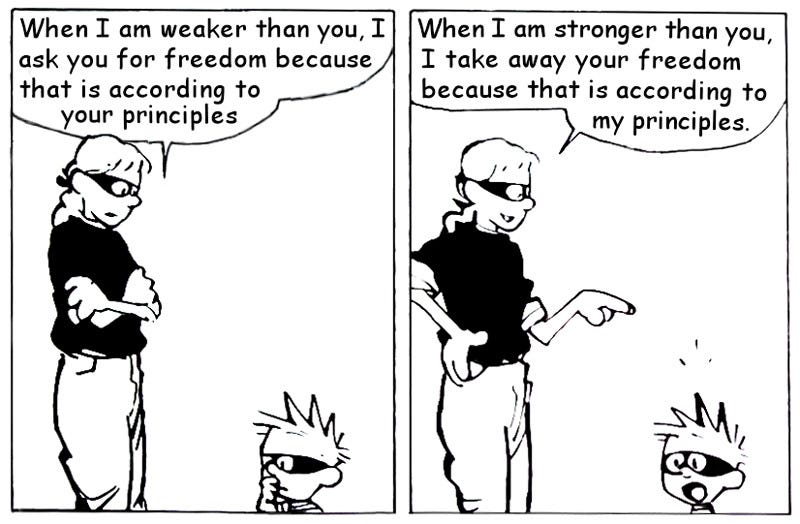
“There’s a sense of betrayal,” said the former Hamtramck mayor Karen Majewski, who is Polish American. “We supported you when you were threatened, and now our rights are threatened, and you’re the one doing the threatening.”
Welcome to politics 101, Karen.
While justly lambasted today, conservatives in times past often talked about the “natural conservatism” of many minority groups. They expressed how Muslims had more traditional family structures and moral codes, explicitly rejecting many aspects of modernity. On paper, they had a point. Muslims are patriarchal and traditional, with many of their social mores much more in line with traditional Americana than modern hedonism. Reality is more messy than paper though, and they vote with progressives for reasons other than ideology. They see the democratic party as a counter to the still powerful bloc of the white, Christian majority as well a method of resource extraction from the majority for their minority group. The fact that feminism and LGBT ideology is anathema in their culture is met with a shrug. That only applies to white people. The progressive coalition extracts resources for them but are unwilling to demand anything but their votes in return. It’s a good deal.
To get a glimpse of how this looks, we can use a somewhat outlandish hypothetical. Imagine if, somehow, progressives treated traditional Catholics with a sort of divine awe. They give hundreds of millions in funding to Catholic covenant communities of dubious legality after they somehow manage to drive every other religious group out of the area. They even get promised their own federal representative in the Democratic machine.
The other evangelical communities are justifiably outraged at the TLM Catholics getting these sort of carve-outs and want them forced to play by the rules everyone else has to. Say you are a TLM Catholic in this area. The progressive coalition is antithetical to all the Catholic’s values, but they are giving you resources and power in return for a vote. They look the other way at your way of life being antithetical to their public pieties. On paper, looking only at the party platform, it makes no sense to vote for them. Looking at the wider political realities, it does. You can argue about the morality of such a coalition, but you can’t argue against its effectiveness.
Karen Majewski made the mistake of assuming a vote meant compliance with wider party norms instead of a shrewd political calculation.