


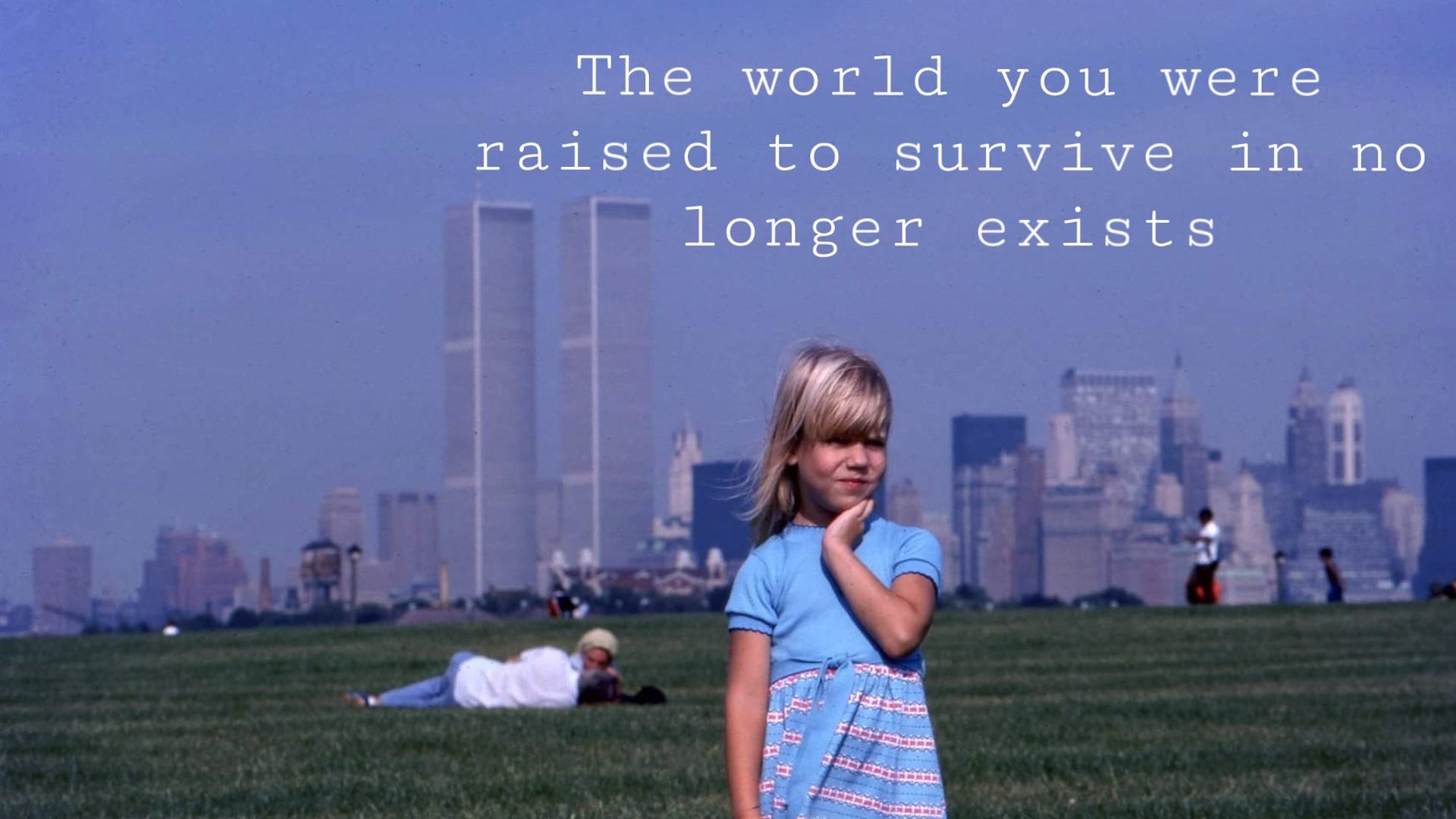
As many have noticed, the twilight of the Trump honeymoon has unfastened the glue that held the tenuous alliances in the dissident sphere together. While there are many demarcations happening, few subcultures exemplify the characteristics of the extremely online feuds as much as Ultra Trads and Neo Pagans. Both archetypes tend to be very well read, knowing details of history and hidden esoterica unheard of in the general masses. While there are many such niche cultures in the forums and chat rooms of the internet, these have the loudest activist networks. The results are unsurprising, countless Twitter spats, hours of podcast chatter created, and tens of thousands of words in long essays spilled.
A lot of writers on both sides I deeply respect have entered the debate. The purpose of this article is not to regurgitate the points made, but if you are interested you can read some foundational arguments, some of the rebuttals, and Copernican’s interesting tangential discussion on micro-cultures yourself. The core crisis the discussion is trying to come to terms with is the continuous dissolution of our connection to the past. Whether it’s the heavily tattooed NeoPagan who wants to go back to his Druidic roots, or the neatly dressed Protestant whose stomach turns seeing a pride flag over his church, there’s a stark realization of rootlessness and lack of place. This problem of identity is nothing new, but as shared culture becomes more abstract and indistinct, the drive for authenticity has reached a fever pitch.
The upcoming generations have had to deal with rampant political restructuring, displaced family life, an increasingly intrusive state, and cultural flattening. They aren’t the first generation impacted, but we are reaching the point where no one even has a grandparent who remembers when the nation was cohesive and homogenous and their family unit unsplintered. The idea of living in a space with strong implicit trust and unwritten but well-known social customs is foreign to most young people who only know the chaos of the online space and the brittleness of social interactions. They’re the first generation where courtship is not just strained but completely broken. They’re the first generation since the Great Depression that will see a dramatic decrease in their standard of living.
The urge to find some anchor to avoid drifting into the void is irrepressible. Those who don’t want to live every hour of their lives smoking weed and playing video games are looking for higher meaning, a deeper identity than consumer. Times are hard and the lure material wealth has become empty and barren. They know others lived through tumultuous times, and their ancestors found a way to persevere, but that connection has been severed by the nomadic lifestyle of the past century and strained familial relations where children are lucky to know any of their extended kin.
RETVRN
Until recently, the impulse to connect with the past has taken the form of returning to the social mores of earlier times. This was the stance of the mainstream conservative base from the 1980s’ onwards and still has strong adherents in The Daily Wire crowd. Its core idea is there was a time of cohesion, prosperity, and happiness that we drifted away from. For many conservatives, this idyllic time was the 1950’s, before the social revolution of the next decade. Families were largely unbroken, the middle class was attainable, and public morality was stable. Families dressed in their Sunday best and went to Church, had cookouts with extended families, and went to safe schools. They will admit that maybe more respect should be given to minorities, but argue the culture was still at its peak. All we need to do is return to these earlier norms before our fall from grace. It’s essentially a secularized version of the Garden of Eden.
The hardcore trads take this much further. There are plenty of monarchists arguing the poison that has infected us now has its roots in the enlightenment principles of the Constitution, that America was built on egalitarian radicalism. They argue that classical liberalism is a rapidly spreading, culture destroying acid that dissolves everything it touches, leaving nothing more than separated atomic particles in its wake with modernity as its ultimate form. Their idea of returning is moving away from the complicated technocracy necessary to keep a massive empire together, instead focusing on smaller forms of organization that, while it can’t keep the scale and comfort of today’s life, can at least create a sense of continuity and belonging.
Progressives have an altogether different relationship to the past. While the conservatives find value in these roots, seeing forgotten wisdom to be rechanneled, progressives see the past as something to be overcome. Their conception of the past is Whiggish through and through, seeing moral failures that needed to be rectified, bigots that needed their comeuppance, and injustices to be made right. The original Constitution was a problematic document we’re still working on perfecting; the nation’s Anglo roots a myopic vision to be expanded to higher ideals. The past is a dead relic only useful to understand and realize how much better we can do, then take those lessons into modern times.
The radicals see the past as something to be overhauled entirely. No old institutions or cultural artifact of the old order can stand, and only a complete break will allow us to enter a better world. To the radicals, the past is only an exhausting miasma of prejudice and oppression, worthy only to be destroyed and buried for good.
In short, simple terms, the ideologies follow these definitions:
Conservative: Things were good, then turned bad, and we need to return to the good times.
Trads: Things were never “good”, but more organic forms of social cohesion that emanated in the past will be better for everyone.
Progressive: Things were bad but are slowly getting better.
Radical: Things were always bad and only through total revolution can mankind become free
The question becomes, are any of these feasible, or even wanted? Can we go back to the 1950’s with the rapid change in technology and demographics? Can a simpler trad life be maintained without being crushed by larger, more technological peoples? Can we really be certain that mankind will continue to improve, whatever that means? Will throwing the past aside make a new man, or turn us back into beasts?
The two moderate positions, Conservative and Progressive, have undergone a crisis of faith as society has fractured. The progressives are reeling from the stark reality that much of the “progress” of the last half century has been rejected, not only by the native stock but increasingly by the waves of new immigrants. Their once effective ratcheting of gains followed by a consolidation phase has seen its first hard pushback in memory, with utopian ideals of eliminating distinctions in race, sex, nationality, and religion rejected and countered with countless sub-cultures growing.
Conservatives are faced with a nation that bears little resemblance to their childhood. Glomming to a past few people remember and no one has a way of resurrecting reeks of the worst nostalgia, waxing and waning on the good days while the world burns. While the Trump blitz has reformulated the Federal Government to be at least neutral to their goals, academia has planted their heels in and countless unaccountable NGO’s and district courts have stymied the mild rollbacks made. At a certain point they have to ask “what are we conserving?”

As the center crumbles, this leaves two diametrically opposed and radical options, necessitating a substantial departure to the civic rules of the past. The right has embraced a light Caesarism in the form of Trump, while the left has embraced Kritarchy using the rapidly depleting social capital of the court system. State governments are rapidly shifting in disparate directions, with Florida becoming a bastion for the right and California for the left. It coming to the point where moving to another state feels like entering a foreign country.
Restoration, Ethnogenesis, Annihilation
There have been countless religious revivals throughout history. The United States in particular is rife with them, whether you talk of the old-west preachers or the Billy Graham revivals in the mid-twentieth century. The faith life of this nation has come in ebbs and flows through its short history, and is showing signs of an uptick. The increasingly vocal religiosity in deeply faithful but disagreeable remnants of young men are a thorn on the side of their elders who wish to remain on good terms with general culture. The Trump ascendancy, while lead by an irreligious playboy, has become an unlikely avatar of a new spiritual movement. There’s still that dream of American exceptionalism, the “City on the Hill”, a beacon to the world. The same sense of manifest destiny that drove its inhabitants north is the core mythology of the restored order they hope to bring into being.
Many have big aspirations of how far this can go. There are the Christian Nationalists who see an opportunity to turn the nation into a modern confessional state. While the general population is more irreligious than earlier times, many at the helms of power are moving in the opposite direction, and if elite theory is true, the general population will move along with them.
The next decade will see how practical this movement is. Can our fractured American identity be mended back together? Can enough deportations happen to maintain the hegemony of Heritage America? Can a strong cultural force assimilate the influx of new arrivals into a core American identity? Can something like classic Americana be available to the next generations in a more modern form?
There are those more pessimistic who consider restoration of such a mess a fool’s errand. They see the need to let modernity eat itself alive and to create conclaves amongst the coming ruins. Eventually this insular, tight knit group will build its own social institutions to live in outside the dominion of any state. Over a course of time, a new unique tradition will form among this expanding alcove. Ethnogenesis. The founding of the United States arguably fits this category, originally refugees of the old world who wanted to live according to their own religion. Joseph Smith famously came to Utah and formed a new religion based on his religious zeal, charisma, and access to open land to settle. You see this in modernity with migrations starting not based on job opportunities, but political considerations, and this migration has turned states like Florida into Republican strongholds. These groups will likely take some of the various traditions of its inhabitants and over time it will mold into new customs and ways of thought.

History is also full of cultures that have been erased, and countless civilizations have risen and fallen without a word to their name. Cities were conquered, its gods destroyed, and its people subsumed into the victor’s world. Others, over time, simply forgot who they were and where they came from, ultimately losing their folk ways. Mass homogenization has wiped out many local customs and ways of life as the modern nation-state took hold, and the new era of global communications will wipe out even more. Revolutionaries consider this a great victory, the ability to start with a blank piece of paper and start from scratch, away from the messiness and complexity of history and religion. It’s no coincidence that the ones most amenable to such destruction, willing to throw their family and ancestors under the bus for vague ideals, are also not above genocide to fulfill their wishes.
Vergangenheitsbewältigung
This German monstrosity of a word, meaning “coming to terms with the past”, is a continual process every people grapple with. This can take the form of self-guilt like in Germany, the swelling patriotism of many Americans, or the matter-of-factness of the Russians.
The Russian relationship to its past is an interesting example. While most agree that Stalin murdered tens of millions of people, they also credit him with Russia’s industrialization and defeating the Germans in World War II. There’s a sort of “it was what it was” mindset at work in knowing the history, warts and all, and still making it their own. There’s a simple honesty here, removing the moralistic lens in favor of a more wholistic vantage point. After all, whether your father is a good man or a drunk, he’s still your father. The society you were born into made many questionable decisions, many to their detriment, but their failures don’t make them any less your people. It’s who you are, built into your bones.
There’s a toxic mindset in much of this discourse that assumes we can just ignore the parts of our heritage that are embarrassing or inconvenient. That you just take what you like. The Otter wrote of this pitfall very well in an article he published as I was writing this:
Traditions cannot be plucked from the past to adorn the present like a feathered headdress. They live only through their breathing representatives, woven into the fabric of now. Traditions that have vanished are mere remnants, vestiges we may excavate and study, perhaps even restore, but to revive them without regard for continuity is a Sisyphean fool’s errand.
Whether it’s the neopagans who want to wave away millennia of Christendom in order to return to more primal religion, or the TradCaths who want to dissolve the new Mass and pretend it never happened, there’s a fundamental dishonesty at work, and a lot of ink has been used to justify just such courses of action. The NeoPagan Ancestral Principle that states whenever there is a contradiction in divine command, the oldest is the one to follow. Catholics, who have a tradition of organic theological development, argue the Second Vatican Council was a rupture from previously held beliefs, which just creates the next question of why it was allowed to occur. Then there are the protestant sects, with the faithful battling its own leadership who bowed to modernity.
If we are to follow in the light of Tradition, it implies embracing our entire past. After all, doesn’t honoring our ancestors mean honoring all of them, honoring their work navigating their time to ultimately bring you into the world? How does a NeoPagan reconcile with his countless Christian ancestors? How does a TradCath reconcile his Church’s seeming embrace of modernity? How does the former protestant who turned Eastern Orthodox justify abandoning the faith of his forefathers? How can one make sense of this without giving the feeling of betraying your heritage, both for yourself and your progeny?
Of course, every man believes obedience to God overrides obedience to his parents. But every major religion puts heavy emphasis on familial bonds and the natural hierarchy that forms around it. Your quest for authenticity will impact your children, who will be taught the faith and customs you teach. In the end, regardless of your choice, you have to believe it’s true. They will ask questions. If you converted because it sounded “based”, out of political expediency, stemming from animosity towards your dad, or as a middle finger to your enemies, they will see right through you. If you’re incapable of coming to terms with your ancestors, your children will likely fail to come to terms with parents who masked their nihilism under the cloak of tradition, and those fake traditions will die.
Many will borrow the custom and traditions of a foreign people. Many will try to reach back to their roots to come to terms with who they are. Can you take that old relics and make them new again? Those ancient ways made sense in your ancestor’s time, but can you revivify them ways in a way that makes sense in your own time? Are you nurturing those forgotten ideas and making them real?
In times where so much of what our ancestors took for granted has been washed away, there is much grayness whether you are actually creating a new tradition or resurrecting an old one. If successfully planted though, in a few generations it will be a distinction without a difference. Even if the custom feels like a LARP to you, if will feel less so to your children who lived it from their childhood, and by the time you are a great-great grandparent it will be the air your progeny breathe. Such organic outgrowths take generations to reach mature form. They won’t be won through an executive order or the rhetorical bludgeoning of online bloodsports. It begins with a basic unit of fanatical, disciplined, like-minded people and the family.
In Ancient times they believed forgetting one’s forefathers and abstaining from the family rituals would make them rise from the graves and wreak havoc upon the living. Even worse, failure to transmit one’s customs to one’s children would doom you to also roam the earth as a hungry ghost. While these are seen as a strange fairy tale now, there is a glint of truth in those old folk beliefs. Refusing to honor one’s past, whether it was joyous or ugly, leaves a hole in one’s heart that can’t be filled. One can’t reject one’s ancestors without rejecting oneself. While those with lousy parents are justified in living more virtuous lives, and many converts caused family grief in moving away from the ways passed down, there is still an honor and respect owed to them, and it’s not a decision to be taken lightly.
Your ancestors are still alive, and whether you believe this metaphorically or literally is immaterial. They live in you, and have an interest in continuing the spiritual legacy they left while still roaming the Earth. Every human being, by the uniqueness of their ancestry and relationships, will have to come to terms with them differently. No one is an unrooted individual. Everyone is a branch in the family tree that started as a sapling eons ago. Every such branch is unique but gets sustenance from the growth that came before it, nourished by the soil of the divine.
Thank you for reading Social Matter. If you enjoyed this article, please consider sharing and subscribing. For those who don’t want to be terrorized by hungry ghosts, consider becoming a paid subscriber.
Great article. Thanks for the shoutout.
Honestly I feel like it could have used another few paragraphs at the end. You're absolutely right that it takes multiple generations for traditions to mature. We've lived through the western "End of History" as Fukuyama said. It was an attempt by the post-modernists to wipe clean the slate of society and start again. It was a disaster.
Rebuilding what was lost will take a generation or two as new traditions and taboos are forced to develop. What we need most right now is space. We need cultural breathing room without constant once-in-a-lifetime changes to our ways of being. We need time to develop and the Tech Bro's are keeping human civilization too unbalanced to evolve new thoughts before they're rendered once again obsolete.
I think we'll figure it out, but the next 15 years will be touchy.
The most micro-culture of them all has a membership of 1. Individualism is alive and well!
All of this fitting people into groups is so last year.