


Few phrases in the modern lexicon are as corrosive as “Elite Human Capital” (EHC). The phrase itself treats man like a fungible good, an interchangeable cog to put in the right place so that the watch runs as expected. It’s a delegation of a human being to a number, a production unit.
More baffling are those who proudly proclaim themselves Elite Human Capital. They have the right IQ scores, the right ideas, the right education. Put them in charge, they say, and the problems of modernity would go away through their strong leadership, rock-solid analysis, and key insights. They enter the striver pipeline, go to the right schools, have the proper secular religious beliefs, and are rewarded. The path is simple if you follow the designated rules of the academy, know who to schmooze with, and are the right race and sex. This has changed as the plane of allowable ideas has steadily eroded and immutable qualities have blacklisted a significant portion of the population from elite circles. Now counter-elites are forming.
Many of these “counter-elites” are spiritually the same, the progressive elite’s mirrors. The only difference is the solutions offered. These types are all over the right-wing internet. They are just as abstract, just as technocratic, just as barren of tradition. Replace equality with human biodiversity, replace secular values with cold rationalism or vitalism, replace natural bonds with technocratic governance. Put everything under a different universalist umbrella but give them power instead.
In both the right and the left’s neglected elites, we observe the same seething, the deep anger of those who feel the world screwed them over, the secret kings who are aghast that their brilliance has not earned them rulership. To be fair, many of these individuals possess high intelligence, and life has dealt many of them a lousy hand. What’s baffling about this type of person is the amount of pride they take in being seen as a simple, fungible unit for the administrative machine. If fact, their self-identity is wrapped in being more economically valuable than those less intelligent, less skilled, less refined. Often, they have the brains and the competence, but no opportunity to use them to full effect. Unfortunately, this often leads to animosity not toward the elites in power who ignore them, but towards the common man they don’t understand.
To Elite Human Capital, those morons who watch Fox News, listen to Candace Owens, or watch the TPUSA Halftime Show are irredeemable, useless to the cause, a liability. They need to know their place and defer to their betters. Giving a political voice to these chuds has turned progress back decades. After all, it’s their fault more refined dialectical points are ignored. They’re making certain ideas low-status. Slop directed at the masses are reducing the prestige of their obviously correct opinions.
It’s not an exaggeration that they see the average blue-collar worker as cattle to do as they’re told to bring the future technocratic paradise into being. The same worker’s contempt for this elite hubris is more evidence those halfwits are to be sidelined.
Many glorify the blue-collar life from a myopic view of a wholesome past with little resemblance to current reality. This is especially true today, as the lower classes are degrading into drug abuse and rampant dysfunction. Often this naive elder tells young men to live in a small town and get a local church girl. Still, the archetype in their minds isn’t without merit. There is a gritty virtue to those electricians, HVAC installers, and roofers. While those jobs were never glamorous, they had a quiet dignity that once allowed laborers to live in modest means. Many of these workers in times past worked their way from the bottom to run the business twenty years later. Their political opinions were often inaccurate but directionally correct. While EHC sneered, Trump showed what such masses can do when directed towards a goal, however haphazard and chaotic our president has been.
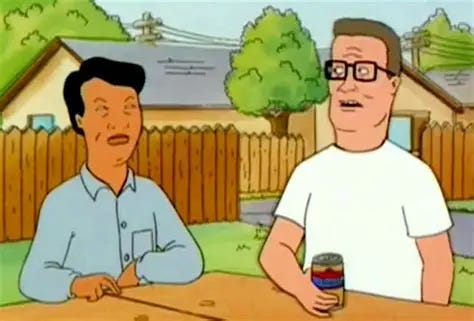
With their sneering attitude, it’s clear these so-called elites have led nothing more important than an internet mob. We have a mass of elites who have no clue how to be magnanimous, charismatic, or a team player for those with similar aspirations. Most of all, they never understood how to get the best out of someone. While there are countless examples among the punditry class, they exist in your company, in your neighborhood. Their kids go to your school. These strivers who checked all the boxes are everywhere, but likely the best archetype of this person comes from Khan Souphanousinphone from King of the Hill.
The first conversation is Hank Hill welcoming Khan to the neighborhood, saying matter-of-factly that since they were neighbors, they were friends. Khan then impotently tried to explain that he is Laotian as Hank continually asks if he’s Chinese or Japanese.
Khan is a classic striver, achieving employment at a high-paying tech sector job and constantly trying to hobnob in elite circles. His contempt for his “redneck” neighbors is equaled by his shamelessness in sucking up to high society, often to his own humiliation. A common theme throughout the show is Khan’s anger at not getting the recognition he thinks he deserves, often seething that a bumpkin like Hank often gets more admiration from those in the neighborhood.
I loved King of the Hill in its original run, and while the last seasons Flanderized many of its characters, there were laughs throughout its entire run. They time-warped the characters for a continuation last year, with Hank just getting home from working for years in Saudi Arabia. He now has a grown-up son and is wealthy enough to retire. It was a clever setup, as it made clear a subtle theme throughout the show’s original run that Hank was not only religiously fanatical about propane, but incredibly talented. In the original seasons, Hank was assistant manager of Strickland Propane, a clearly maltreated employee who nonetheless did his work with religious fervor.
It was heartwarming that he went to better things, even if only foreigners could truly appreciate him. He was highly skilled, far more than his old layabout boss. In the reboot, Hank gets calls from his former Arab boss begging him to come back by offering him ….a sword.
Given that the international stint gave him more than enough money to retire, he likely rose to a powerful position. After decades of being underestimated and underutilized, he proved what his Texas gumption and perfectionism could do. For all his ignorance in many subjects, he could really lock-in when it was something he cared about. You feel he would have been an incredible Secretary of Energy.
Of course, Hank didn’t have refined political opinions, and most of his pontifications amounted to a warmed-over Reaganism. He didn’t listen to the right music or hang around in the right crowds. He certainly had no care for new trends. Yet in the game of “Elite Human Capital”, he surpassed his smug and elitist peers. Even more, even when he was higher-status than some of his colleagues like Bill Dauterive, he did everything he could to protect him, even when it required humiliating himself. He had no care about status games, and likely no cognizance they were being played.
This sense of duty made him an excellent mentor, even when unwanted. Teaching the proper setup of a grill gave him more joy than anything and he had the patience to mentor as simple a task as cleaning a propane tank. While it’s never seen what Hank did in the Middle East, rest assured he mentored with as much care and reverence as he did at his middling job at Strickland Propane, and rest assured he didn’t care if his underlings were “Elite Human Capital” or not. He was entrusted to give support, and support he did.
It’s not smarts that separates the wheat from the chaff, but the one who will put in the time to elevate those around him and find opportunity in lousy situations. A common theme of every good leader is the tenacity to have high expectations of everyone under him, and to have higher expectations for oneself. A good engineer is not the one with the best designs or code, but the one who can properly explain it, build rapport, and patiently endure the less talented. Watch the respect a senior engineer gets when he’s willing to get down and dirty solving problems with the lowly technicians and you’ll see what loyalty and admiration he receives. While everyone likes the idea of being the gruff and brilliant scientist whose intelligence no one approaches, those guys will face some interesting problems, but they won’t be leading anyone.
If you want a slice of the general population, go to a men’s charity organization. You’re likely to see a small portion of creative, competent guys who are natural leaders. There will be most who are your everyman, the reliable types who like to come over and chat a little but leave the heavy planning to others. Then there is the bottom rung, the ones who make the meetings run long with useless tangents, the ones who have an enlarged view of their value or are sometimes just plain lonely. They slow things down and make an easy twenty-minute discussion turn into an hour. And these are the people who actually show up.
Your average Elite Human Capital type would point at that bottom rung and say the organization should get rid of them. Heck, the top guys should just convene offline, make all the plans, and tell everyone what’s going on. That would be nice and efficient. Yet anyone with such a policy will quickly find themselves with no volunteers. The lousy treatment those who just wanted community received would appall the everyman. He would understand you’re not on their side.
Every healthy organization works the opposite way. The top men patiently listen to the timewasters and redirect them. They’ll chat even more after the meeting is over and give advice. They’ll give a gentle nudge in the right direction to the most seemingly hopeless of cases. They find a task for the most bumbling of members. They magnanimously give their time and expertise to execute things that Elite Human Capital would consider beneath them.
And you know what? Those “worthless chuds” can flip a pancake for that charity event, hand out tickets to that 50/50 raffle, and even hand out flyers for your city council run. Those “losers” with their unrefined opinions can be your strongest warriors on the ground when given direction. A leader understands that those with less talent need meaning and place too, and can bring value to the table where everyone else sees a hopeless nobody.
What separated Hank from the EHC types is this sense of place. He doesn’t love people because of their SAT scores. He loves them because he is a Texan, and while Khan is originally from Laos, in Hank’s mind he’s a Texan too. Hank’s co-workers are like his adopted children because of his unbeatable work ethic. There’s an almost childlike innocence to someone like Hank, whose rigid sense of right and honor elevates the business he works in, relationships throughout the entire neighborhood, and even his marriage to a well-meaning but insane woman.
Elite Human Capital can’t even compete with such a simple and, in ways, naive worldview. There is no sense of such deep loyalties, no spiritual sense of what they are. They are proud to have the right opinions, to be in the right groups, and in the process have become cynical to the core. They can solve complex problems, but what they can’t solve is what it all means. Giving them power would be akin to handing the keys of the city to a foreign mercenary. Sure, he could run things efficiently, but he hardly has your best interests in mind.
A question I have for all these Elite Human Capital types is, could you get your local Rotary Club to accept your proposal? Would you patiently go through the bureaucratic nonsense necessary to make a new park? Do you have the patience to deal with those less intellectually gifted than you, build rapport, and give direction? You want to lead men, direct policy, change the world, and yet why would anyone follow you? Why do you think your Cambridge degree confers that respect upon you?
There are quiet elites everywhere. They aren’t just in the think-tanks, but in your neighborhood HOA. They’re keeping the fools in local government from driving the entire city off a cliff, the friendly guys who worked in the same factory for decades and can tell you how the machine was repaired fifteen years ago. There are countless little heroes at every level your policy wonk is dependent upon. Those guys are going to have some strong opinions and unkempt manners. If you want some social tact, you’re often not getting it, yet those men keep the world running. As Philosopher of the Oil Sands said:
My fellow sandblasters possess ardent tempers which flare up without warning and pour forth sublime rage through their few remaining teeth. Though they often look like they are a single cigarette away from death itself, they equally possess an adamantine will to preserve their autonomy absolutely. Such a man can never surrender to the pretenses of civilized society—he is far too bestial.
And yet the paradox of it all is that society is entirely dependent on men like this, because for all their flaws, they are among the hardest workers on the planet. They keep the lights on in your homes and the gasoline flowing through your cars.
I would go further and say running through these rough characters’ veins is a resourcefulness that can’t be taught, an eye for nature that no book can portray. Give many of these guys opportunity and more responsibility, and they’ll rise to the challenge. He’ll have an instinct for the industry your recent MBA hire can’t touch. He’ll see through the bullshit everyone else ignorantly swims in.
In the reboot, Khan is living in the garage, divorced and humiliated after the dishonor of his collapsed marriage. In typical neighborly fashion, the guys come over and invite the disgraced bachelor to hang out with them. Even through all the contempt, they’re willing to offer a chance to get him on his feet, which he brusquely refuses. It should be obvious such contempt rots the soul, and the same malignant spirit that likes to punch those lower than him lives in the dad who beats his kid after getting reamed at the construction site, or the middling manager who gets sadistic pleasure out of domineering his more talented but weaker underling. Because of their impotence in getting the attention and respect of those above, they take frustrations out through those they should be protecting.
Being elite means being willing to start small and execute that task well. If you can’t be trusted on minor tasks with mediocre teams, you can’t expect the current elites to give you a chance. For those who are wrongly kept out of high society through DEI woke regime, you’re not doing yourself any favors taking out your anger on those from whom you could earn loyalty. In every walk of life there are a plethora of people overlooked because of their disagreeableness, race, or plain old malice. Your elite ally might be the repairman who enters your home, the college grad who can only get landscaping work because of a leaked video of him saying the word of power, or the young adult who never got his feet on the ground. Maybe instead of trying to get the recognition of those in the ivory towers of a dilapidated institution, look around at the diamonds-in-the-rough all around you and make something new. There are millions of Hank Hills in this world for those who have the humility to look.

Thank you for reading Social Matter. If you enjoyed this article, please consider sharing and subscribing. For paid subscribers, the quick bonus feature above “Like Father, Like Son” explores how Hank influenced his son in hidden ways.
Incredible piece. "Sure, he could run things efficiently, but he hardly has your best interests in mind" reminds me of a very MBA/consultant/private equity adjacent vibe
This is the opposite of the way big corps operate. Microsoft and Amazon make the leaders Stack Rank people and basically cut the bottom 5 to 10 percent yearly (if not layoff, they "ease them out" via bad assignments etc.) There is something seriously broken with "capital" in how it treats people