


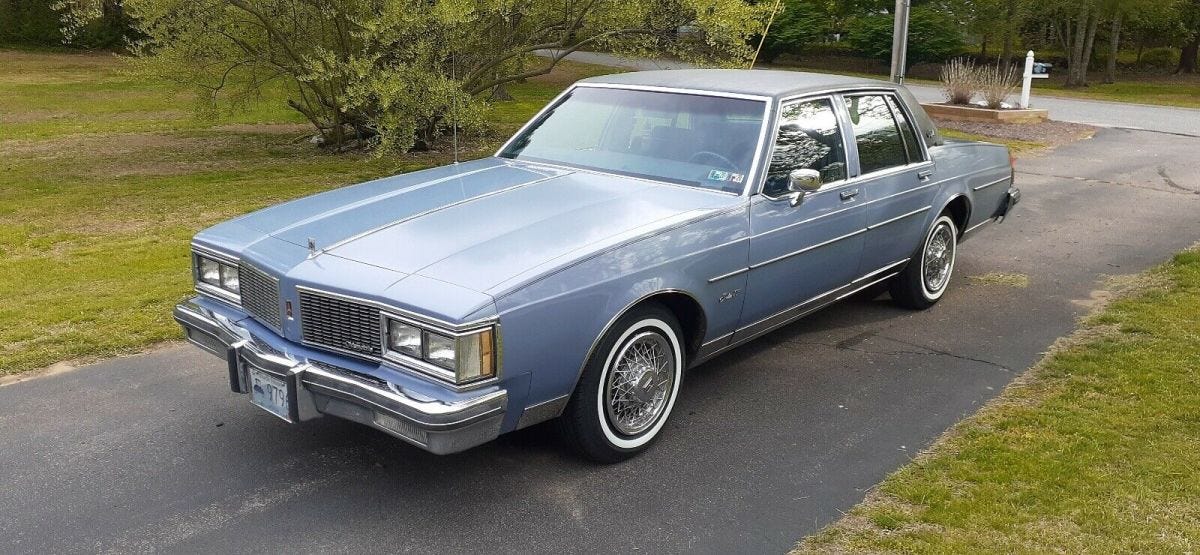
My face dripped with sweat, and I hadn’t even pulled into the parking lot. The air conditioner crapped out long ago, and the sweltering humidity of July in the Midwest showed no care for comfort. I didn’t care. The massive slab of metal that was my Delta ‘88 survived two deer crashes and a side collision, being the closest thing to sitting in a tank I would experience for two decades. It served its previous owner for fifteen years, and now was mine. It was the summer of 1999.
I spent the morning in the barn loft baling hay for a local farmer. As is tradition, he would look at the football roster and call all the linemen for help. Those were the kids he could trust. Not only would they not conk out from fatigue in the middle of the load, work-ethic was assured as none of them dared falter in front of their teammates. All that was needed was a quick glance, a passing sneer if someone saw a slacker in their midst, and respect would be lost. Teenage boys would accept a lot of failures and stupid mistakes, but not weakness in crunch time. By the end of the day, we all stood drenched with sweat as the farmer paid our wages. It only lasted three hours, but the loads came nonstop, the early morning heat draining our energy reserves. My arms lit red with countless scrapes, and I still had a barn loft smell after ten minutes of showering.
Such labor was a dying breed. Farmers were transitioning to massive round bales taller than a grown man. Instead of football players, they moved them with heavy machinery. It was a practical replacement; the rectangular barrels only suitable for the classic but obsolete red barns that remained. It was good money while it lasted. Such is the relentless flow of progress.
My workday was not over though. The rest of the crew talked about going to a party that night. I had to decline to work my other job. I yanked at the steering wheel as I rolled to the back of the restaurant, the power steering on its last legs. The smiling mascot of the fat little kid proudly holding up a hamburger, the cursive words “Big Boy” emblazoned on the sign. I stepped out, the pungent aroma of the overflowing trash container greeting me. One of the older women just done with her shift busily finished her last cigarette, nodding at me with half-dead eyes saying “welcome to hell” as I opened the steel back door.
Walking into the dishwashing area, the industrial metallic cleaning monster took prominence through the rest of the metal tables and tiled walls. With a narrow opening as far away as possible from the front, it emanated the embarrassment every restaurant has, the dishwasher and accompanying workers being a necessary evil to its functioning. Something to hide from customers. It had the comfort of a prison cell.
Roy was finishing up his final load. A thin, frail man in his fifties, he was mostly silent, and the only time he talked there was a low drone to his voice and a minimum of syllables, caked with a deep anger. He had worked here for over a decade, and no one knew anything about him, leaving the gossip mill to create all sorts of legends regarding his backstory. One was that he fried his brains with drugs in his youth and this was what was left of him. Another was that he was stationed in Vietnam and PTSD from the experience cracked him. What everyone could see was an older man with limited cognitive abilities, and likely some dark secrets. I knew that if I read an article of a dishwasher going postal, I would assume it was him. He left in a huff, 4:00 coming as I punched in my time.
The radio hummed an alternative rock station. It had a very short list of music, meaning I would be likely to hear the same popular songs every time I worked, and sometimes twice. Rest assured I would get my fill of Matchbox 20, Blink 182, and The Barenaked Ladies.
This was the calm before the storm, and I saw the owner and his son making the rounds in preparation. The father had three Big Boys under his belt, with ambitions to buy many more. Both of them were large, stout men, but moved with a quickness and awareness that came to everyone in an environment where anyone could be strolling with seven meals on a platter. They were a team, both having dreams of a restaurant empire that would make them made men. They rarely yelled, rarely harshly disciplined, with maybe a stern word at most. Anything else and they would just fire the troublesome worker and save the trouble. I had respect for their work ethic and discipline, which was unmatched.
Unfortunately, they were also notorious cheapskates. After working six months, my pay was only 50 cents more than minimum wage. The farmer I worked for that morning gave me double that, under the table. It meant employee retention, always bad in the restaurant industry, was astronomical for the dishwashers. It was 50/50 whether a new hire would show up for his second day of work, and I didn’t blame them. My partner in the dish pit was a 14-year-old boy, the only person who would take the lousy pay. By the end of his first day the kid was on the verge of tears, and I wondered whether or not I would be flying solo tonight. In any case, the kid couldn’t work to close because of his age, so I would be doing all the final cleaning.
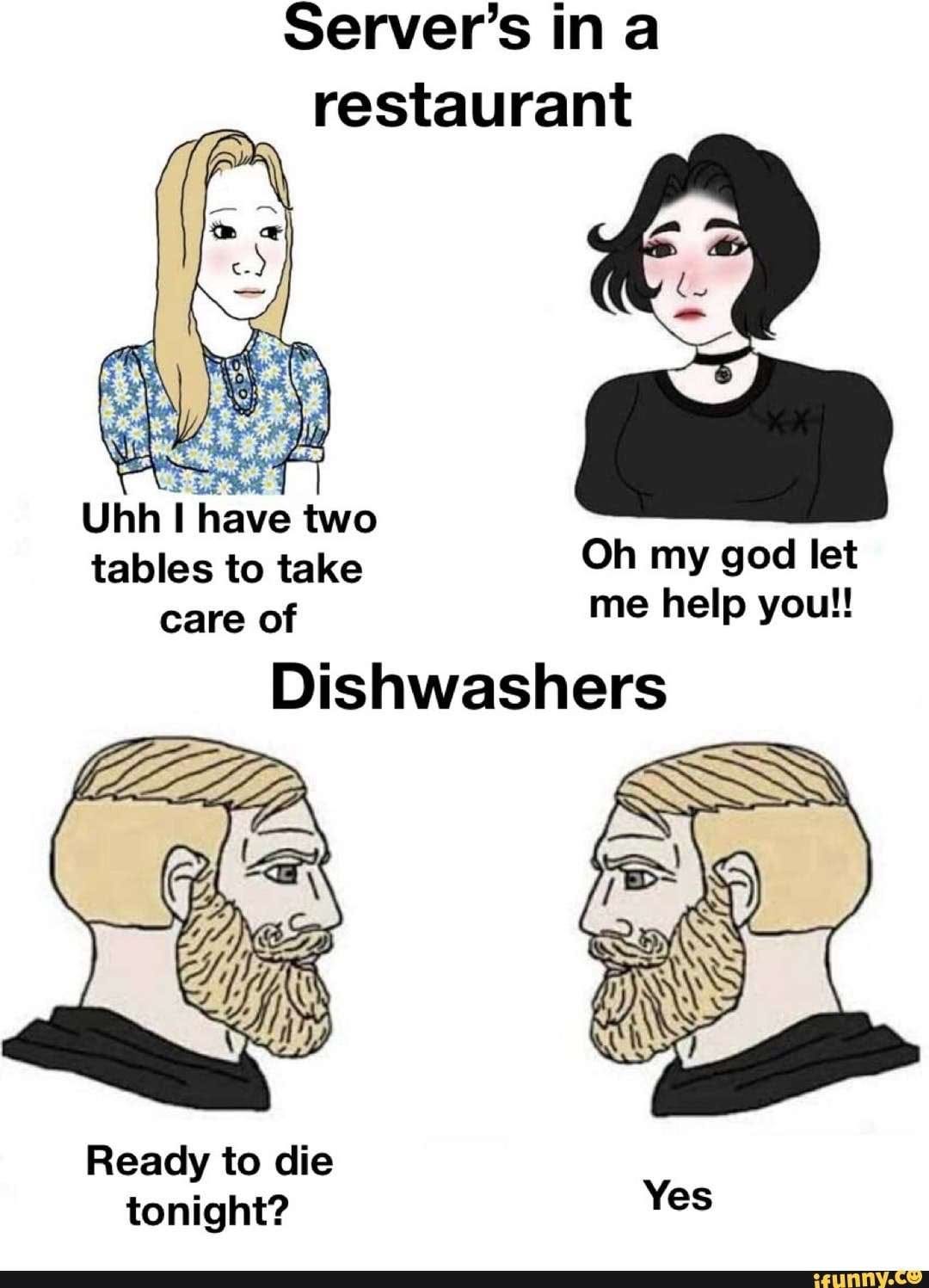
I asked them a month ago if I could transfer to cook, figuring I had earned a promotion. Both were on board and told me I would start training soon. Then, when they realized no replacement was forthcoming willing to take my role, they quietly dropped it and gave it to a guy working kitchen prep. I could have walked out and got a better job, with better pay, within the afternoon. For some reason I had a sense that they would make it right. They didn’t. It was a hard lesson, and one I keep to this day. If they back off on their word without owning it and trying to make it right, your foot should be halfway out the door.
I grabbed the half-full dish cart from the front. The older waitresses were finishing with the gossip, usually involving a new boyfriend or juicy details of a teenage daughter following the same path as her mother, and reaching the same dead end. The type of employee in the low-grade sit-down restaurant fit either into the young temporaries, those who were looking for college money or a first job for experience before moving on, and those that got “stuck”. The “stuck” ones once had dreams, but life moved on without them, and they found themselves in middle-age still working the job they had as a teenager, often with a kid whose father disappeared a decade ago. No one puts “Big Boy employee” as their life aspiration, and no one starts “stuck”.
The younger crew made their entrance as the old, crusty veterans made their leave. Tonight we had the A-Team. There was the attractive blonde with a perpetual smile, already laying on the charm on her first customer of the day. She was so petite it looked like she was swimming in the smallest uniform they had. She had the sweet country girl schtick down to a science. Smooth, focused, and with a razor devotion to extracting the biggest tips possible from her customers, she was a killer. The girl would regularly earn more in a night than all the other waitresses combined, winning their ire. It didn’t matter, she was there to make money, not make friends.
The single waiter was a gigachad, a college sophomore with dark features, broad shoulders, and chiseled face. He had an accommodating but serious demeanor with glimpses of disarming charm. While the blonde waitress would get her best tips from horny middle-aged men, he got the juices flowing in the old ladies. One time a grandma gave him a hundred-dollar bill as a tip, exclaiming how he made her day.
There was a steady stream of older customers coming in. A shy, awkward guy with thick glasses and nervous demeanor was working as greeter with a new girl I never saw before. Tables filled up, the customer side being the front lines for the dinner onslaught, followed by the kitchen in 15 minutes. We would be getting pounded in about half-an-hour. When I returned to the dish cleaning area, my partner arrived, staring down dejectedly as he worked on the first batch of the day. When there were two washers, one was the runner who put the clean dishes back in the kitchen and pulled in new dirty dishes while the other focused on cleaning. On busy days, we would wash the same dish at least a dozen times.
At least dinner was easier than breakfast. Eggs were the bane of every dishwasher’s existence, the yolk stubbornly sticking to the plate that made even out monster machine buckle. The only solution was incessant scrubbing. The worst in the evening were the enchiladas, the cheap processed cheese sticking in the same way. Worse yet, it was microwaved. Whenever I saw that order come through, I had violent thoughts.
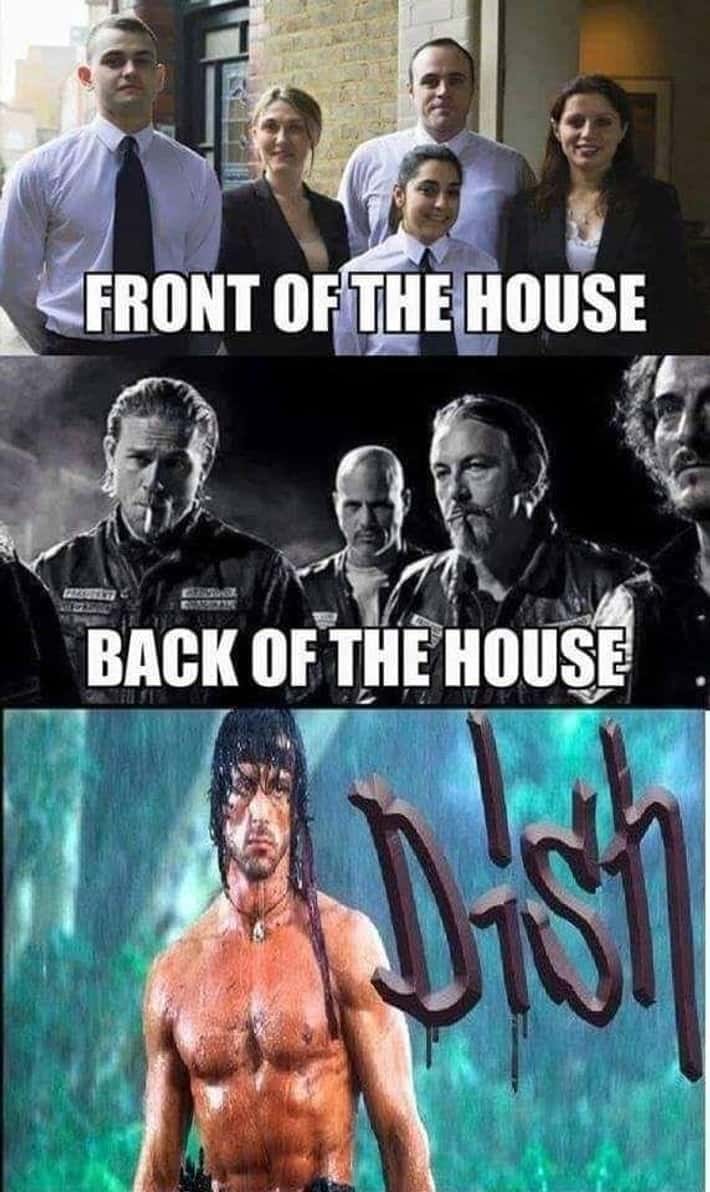
Lacking anything to do, I took the couple of stray clean plates and brought them to the kitchen. The head cook, a large heavily tattooed man in his mid-twenties, busied himself with several sandwiches and burgers on the grill while the microwave above him heated some packaged slop a clueless customer ordered. He glanced over at me and shook his head in a “tonight is going to suck” manner. For his rough appearance, he was a nice guy. He constantly took smoke breaks where he would bitch about work, and sometimes I joined him, minus the smoking. Even with those, he always kept ahead of the curve with orders. He avoided getting “stuck”, leaving a year later a few weeks after I did.
The trainee, a sophomore at my high school, worked beside him. He avoided eye contact with me, understanding how the boss screwed me over. He played on the Junior Varsity football team and was mediocre at best. Just didn’t have the killer instinct, nor the size. The football players brutalized him, and he wondered if I would try to take revenge. Honestly, I had nothing against him. Lucky for him we were the only employees who attended that school, and he was quite a Casanova to the ladies, casually flirting and dating anyone that moved, causing at least one heartbreak in the process. They didn’t know the girls in his hometown didn’t give him the time of day and basked in his newfound riches. Just as no prophet is respected in his hometown, no sensitive young man is loved in his own school.
The girl from kitchen prep came in with some utensils. She had the body of a shot-putter, a piercingly high voice, and an abrasive personality. A kind person overall, but she didn’t have much going for her. She gave me a sad, forlorn glare before leaving without a word. She liked me. I had as much interest in her as the waitress I liked had interest in me. None. The waitress I liked wasn’t even working tonight. So it goes.
The first hot batch of clean dishes came through, the glasses and plates scorching hot coming out. At this point my hands had been dealt much punishment that my nerves took the day off as I barely felt the heat that would scorch anyone else. Industrial washers didn’t mess around. The rising steam as one opened it could scald a face. I tried to initiate a conversation to no avail, my partner’s mind staying as far away from his current predicament as possible. It was rare when we could have a conversation over the incessantly spraying hose and groaning washer anyways.
The son was in high alert on patrol, meaning I had to at least look busy. I took a quick trip to the walk-in freezer, ostensibly to help restack the kitchen but more because I wanted to cool down from the sauna that was the dish pit. I would find many excuses to go in there and take my time getting what I needed. The first stream of customers left, and it was game time. Every table was occupied, with several waiting on benches in the entrance. It was only 4:40. Tonight was going to be brutal. I pushed the now full dish cart back to the pit, the rapid movement and chaos of an understaffed and frantic staff putting everyone in a ride-or-die mode. No time for idle chatter tonight, so one’s own mind had to be the entertainment.
The best way to describe the state of mind when doing long, monotonous tasks is escaping within oneself. You are just as cognizant as you need to be for the task, but the ease and boring redundancy opens up the mind to ponder other things. Instead of one’s mind being empty, it filled with its own thoughts to pass the time as your body went on autopilot. Pulling the steaming dishes out, piling them up, putting them away, clean the excess water, repeat ad nauseum. Once in a while a waitress would interrupt the zone by asking us to replace the soft drink syrup or help bus tables. I heard from others the drama that happens in the back of restaurants, especially during high stress nights. I never experienced that. Everyone was always polite, and they knew when we were getting overwhelmed and would ask for help elsewhere.

For all the chaos, we were holding out own, but at least a dish cart behind. 4:45 turned to 5:00, to 5:30, to 6:30 in rapid succession. The serving area was still packed with customers but showed signs of slowing. We would catch up within a half-an-hour. I hoped the crowds would empty before 8:00, my mandatory break time, followed by my partner’s 8:30. It was sort of a joke on days like this. It’s not like the dishes would stop coming. I would often leave break after ten minutes to ensure I wouldn’t have to work until midnight.
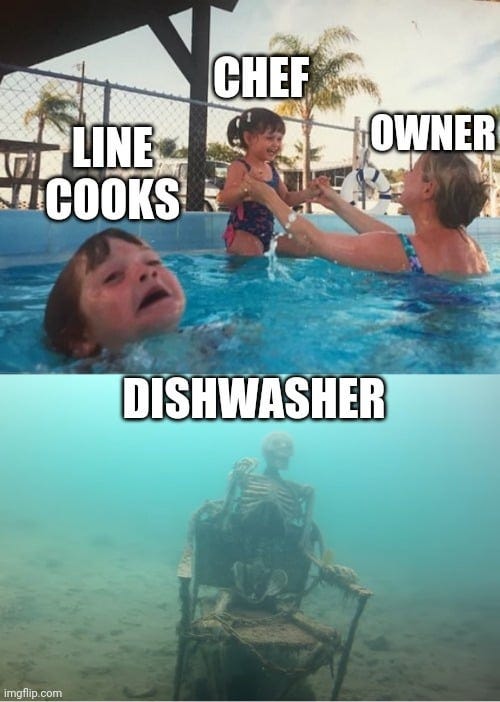
It’s always surreal looking back on those days. As I moved my way up from dishwasher to my first job in software, to sales, to a more managerial role, I’ve become increasingly separated from the product, and the sense of urgency my job entailed also shifted. The timeline of critical work extended from the rapid response of a few minutes in a kitchen to wondering if anyone would notice if I didn’t show up for a month. There was a symbiosis lost too. While dishwashers were the lowest of the low, they were critical, and no one was above talking to us. They needed clean dishes, I gave them clean dishes. There was no middleman in the process. Now I might need to talk to three layers of management before getting to someone on the ground floor who can be direct about what’s actually going on. There’s that separation that strikes me just as much a class consciousness as a managerial necessity, created layers of bureaucracy to ensure one only has to talk members of the same social caste.
The owner’s son retreated to his office to do paperwork at 7:30 when new customers decreased to a trickle, putting the staff at ease, except us dishwashers as we scrambled to catch up. The son walked in, told me to go on break, and continued his rounds. The cute blonde waitress was also in the break room eating a turkey sandwich. Every employee was offered a meal from the menu at half price. Even with the discount, ordering anything would cost me an hour’s wages. I sat down and initiated some conversation using every bit of charm I had, none. She smiled and listened politely, finishing dinner then counting her tips. She accumulated more in tips during those four hours than I made in twenty.
Back to work after twenty minutes, my partner took his break. Silly given he left in an hour, but the law’s the law. I noticed the dish pit floor was strewn with soggy bread, remnants of meat, and other items ground into some sort of brown paste. The kitchen floor didn’t look much better. In the frenzy care to avoid spillage was thrown to the wind, with lettuce, cheese remnants, and spilled soup splashed on the mat. I was the lucky guy designated to mop it.
My clothes were drenched, my feet aching, and the adrenaline wore off. Like waking up from a fever dream that gave no rest, an encroaching sense of doom came upon me regarding everything left to do. The kitchen prep crew’s shift ended, the frustrated girl making a few passing comments to me to test the waters before leaving disappointed. The owner’s son entered the walk-in freezer with a notepad, taking night inventory. Exiting, he saw me standing around for a minute and reminded me I needed to mop the back rooms. I nodded, unable to conceal my frustration. Thanks man, I totally forgot. He pretended not to notice. My partner only had fifteen minutes left and was waiting out the clock, going at quarter speed.
I grabbed a bucket and mop and started on the back rooms. Cleaning of this sort was the worst part. No matter how meticulously you cleaned, within an hour the breakfast rush would turn it into the same dirt and food-caked mess. I had to empty the bucket three times before completing the first room. After twenty minutes, I grabbed an empty dish cart and washed another load. My partner left without a word. Closing time was near, with a few regulars with drinks chatting away. They would come in around 8:00 and sit and chat for hours. I can’t fathom what they could talk about every day. The only other customer sat on the corner table reading. Then a crew of six walked in, filling me with incandescent rage as the waitress grinned in relief. If they ordered the enchilada I might start throwing tables. The chef and I made eye contact in mutual understanding.
The trainee cook finished his shift and was flirting with a shy homely girl with jet-black hair and shockingly blue eyes. She lightly touched him on the arm as they went together to the break room to get their things, leaving together. The owner’s son left, leaving only me, the cook, and the blonde waitress. The head cook came in from a smoke break, noticing the chaos that was the kitchen. “Shit, man” he sighed, shaking his head.
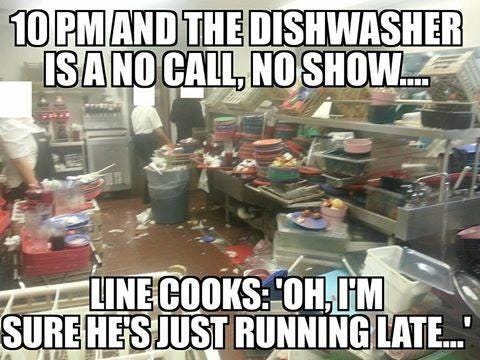
Final cleanup of the dish pit would have to wait. I checked the customer bathroom, something I’m technically supposed to do every hour but rarely have the time. I did a quick toilet paper replacement and cleaned the wash area. It wasn’t too bad. An old lady had an accident a week ago in there, the floor getting covered in shit with the viscosity of water. Things could have been worse. I got out the mop and finished, the remaining customers eating their meals with infuriating slowness. It was 10:10, past closing time. They needed to get the hell out of here.
The cook finished kitchen shutdown while chatting with the waitress, patiently waiting for her last customers to take off. “You need anything?” he asked. “Nah, I’m good.”. “Alright man, I’m outta here.”
I continue mopping, listening with pleasure hearing the soft slap on the floor after hours of deafening noise. The waitress clanged the last of the dishes into the container, then pushed the cart to the pit. She passed by me, purse in hand, saying thanks for the hard work in a sing-songy voice before leaving me the last man standing.
Then silence.
She turned the lights off to the serving area before taking off, leaving half the restaurant dark. Surreal to think of the constant movement, the frenzy just four hours ago. It all now echoed in my mind as I digested the quietude. I got to final shutdown of the dish pit at 10:55, running two final dish stacking rounds as I took the mats off the floor and sprayed them down. then spraying the floor and watching the dirty water flow into the center drain.
I made a quick scan. Only one task left, take out the trash. Pulling out the three full bags, I tossed them to the door and turned off the lights. My clock-out was 11:23. I checked the doors, turned off the lights, and got out of there.
I opened the back door, the faint glow of the parking lots lights illuminating my blue Delta ‘88 the sole car remaining. As I tossed the trash bags into the bin, I noticed a fast-food cup covered my antenna, my windshield had been smothered with the remnants of a smoothie, and someone wrote profanity on its dirt caked doors. Apparently, my teammates saw it fitting to take off from the party to pay me a visit. Thanks guys.
After wiping down my car, it was a fifteen-minute drive from the small town to my village home. I passed by a gas station advertising 99 cent gas, one I often stopped at with a single dollar bill I prayed would be enough for the gas guzzling beast to get me home. The air blowing in felt crisp and cool now. The roaring engine woke up the entire countryside. My muffler broke off months ago. Great stalks of corn rose from one side and far less impressive soybeans in the other, the monotony making it hard to stay awake.
I wasn’t meant to stay, and soon would attend college, then graduate and move into the vast, open world. The country would be replaced with suburbia. I would be surrounded with upper middle-class strivers instead of small town tranqulity. The familiar German-English culture would be replaced with cosmopolitan corporatism. The past would feel like a different world. Where I lived a hard job was a rite of passage, a way of showing you could tolerate the worst in order to have respect for honest work. Now fewer teenagers than ever work, many of their lives cluttered with camps, resume-padding charities, and other meaningless extra-curriculars. Colleges didn’t care if you worked at McDonald’s, Burger King, Big Boy, you name it. They would say that’s not where future leaders are formed. They are wrong, of course, but nothing would remove their bubble of credential brained nonsense. Say what you want about shitty restaurants, but they are real. What you do matters. You see it every day in incontrovertible detail, and what happens if a key member doesn’t do his job.
A haggle of small-town teens could run a restaurant, and it’s in such environments that classic Americana shined. There was that implicit trust and understanding from being of the same culture, being inoculated in all the intrinsic expectations and social norms regardless of whether your family was rich or poor. Some were rough, some total nerds, but even with the hazing and friction there was a sense of oneness, of being the same people. Now restaurant floors are run by employees hailing from all over the globe, and that smooth movement and implicit knowledge is lost in translation. The working class and managerial class might as well be different species now as modernity has dissolved those key early connections, with everyone going to different schools, working different jobs, and living in segregated areas.
The watertower of my hometown appeared in the horizon. I would soon be having a quick snack in a still house before heading to bed. In a few months I would be in my final year of high school. In a year graduated. A few years after that I would start my first professional job. I wouldn’t remember the names of most of my co-workers, but I still remember the smell of burgers on that skillet, the smell of the purple dish soap, the feel of those scalding plates. Most of all, I remember that, even as we all went our own ways, we were once a team in that hot, grimy, stress-laden hellscape, coming out the other side a little wiser. It sucked, but it was real, and I’m thankful being a part of it. Do I want to go back? Ha! No. If I could do it all over, would I take that job? Hell no. But thanks for the memories.
Thank you for reading Social Matter. If you enjoyed this article, please share and subscribe. If you’re a dishwashing Chad, please consider becoming a paid subscriber.
I like the way you describe the "state of mind when doing long, monotonous tasks"; when I worked at Amazon (briefly, thankfully), that's exactly how I would get through those grueling ten hour shifts of packing boxes. It's the closest I think I've ever come to achieving a state of zen - body on total autopilot, moving independently, without any conscious input, while the mind is elsewhere entirely. It's strange and I've never been able to replicate it, but I don't want to go back to Amazon to do it. Especially because you weren't guaranteed to pack every night, and some nights you could be stuck on "picking" duty, which was its own special type of Hell; paradoxically infuriating and boring, but demanding too much thought and engagement to kind of mentally "check out" like packing.
Reading this brought back all the shitty gigs I've done before, but I completely resonate with the feeling. Those types of environment do foster a sort of unspoken unity I've never found in the viper's den of catty, back-biting snakes that is the corporate world. Like you said, I'd never go back and do them again (except for waiting tables at a small, family owned restaurant with cool owners, that place I would have stayed full time if the pay had allowed), but there was value to them all the same.
As a former delta driving dishwasher I salute you, brother.